Dangerous TikTok Trends and Challenges: A Parent’s Guide

A TikTok challenge may begin with a funny video and a simple invitation: “Try this.” For children eager to join in, the risks are not always obvious until someone gets hurt. Understanding which dangerous TikTok trends cross the line can help parents respond calmly, set sensible boundaries, and talk to their child before curiosity turns into a serious mistake.
Key Takeaways
- Challenges become dangerous when they could cause injury, poisoning, respiratory distress, humiliation, or loss of privacy.
- Children may join risky social media challenges because of curiosity, peer approval, rewards, or the belief that a short video shows the full consequences.
- Adults should ask what their child has seen instead of describing frightening challenges in detail.
- Kids360 can help families limit TikTok use, create study and bedtime schedules, or block the app when a firmer boundary is needed.
- A child experiencing difficulty breathing, loss of consciousness, suspected poisoning, serious burns, or a head injury needs immediate medical attention.
Table of Contents
What Makes TikTok Challenges Unsafe?
A high TikTok view count does not make challenges safe. TikTok’s harmful-activities policy prohibits dares involving dangerous tools or substances that could cause significant physical harm.
Families and teens can assess a particular social media trend by asking a few simple questions:
- Does it restrict oxygen or blood flow?
- Does it involve medication, chemicals, alcohol, or household products?
- Could someone fall, suffer a head injury, or come into contact with fire?
- Does it involve dangerous vehicle use, weapons, trespassing, or property damage?
- Could another person be frightened, hurt, or humiliated without agreeing to participate?
- Does it encourage someone to reveal their location, bedroom, messages, or information about one’s body?
- Are participants told to hide the challenge from adults?
- Does the TikTok video show the activity without showing what happened afterward?
One “yes” may be enough to stop, but it’s also important to know that not all viral challenges are harmful. The Ice Bucket Challenge, for example, raised awareness and money for ALS. The American Academy of Pediatrics reports that more than 17 million people participated and helped raise $115 million.
Safe challenges have sensible safeguards and do not ask children to gamble with their health, dignity, or life for attention.
Examples of Risky TikTok Trends and Challenges
Some of these challenges first appeared years ago but still return under new names. Others became major news stories even though it was unclear how many children had actually attempted them. Parents should focus less on the name or popularity of a trend and more on whether the activity could cause harm.
| Type of Challenge | Examples | Main Danger |
|---|---|---|
| Breathing or physical injury | Blackout or choking game, Skullbreaker | Brain injury, loss of consciousness, fractures, death |
| Medication or ingestion | Benadryl, cinnamon, NyQuil chicken | Poisoning, seizures, heart problems, breathing difficulties |
| Pranks and humiliation | Trip pranks, school pranks, filming an unsuspecting person | Injury, bullying, shame, school consequences |
| Reckless stunts | Bird Box, fire trends, Kool-Aid Man | Falls, crashes, burns, cuts, property damage |
| Privacy and body trends | Location sharing, exposure prompts, body comparisons | Harassment, unwanted contact, self-harm concerns, loss of privacy |
These challenges can overlap. A prank can become an assault, while a food trend can lead to an emergency room visit and disrupt life in the wider world.
Challenges That Can Cause Physical Injury
The Blackout Challenge is a social media version of a dangerous activity that has long been known as the choking game. A child deliberately cuts off their oxygen in an attempt to faint. There is no safe way to do this. Oxygen loss can cause seizures, permanent brain damage, cardiac arrest, or even death.
Ten-year-old Nylah Anderson died after attempting the Blackout Challenge. Her family later brought a case involving videos allegedly recommended through TikTok’s For You feed. In 2024, a federal appeals court allowed part of that case to continue. Reuters and the published court opinion provide more information.
The Skullbreaker Challenge involves two people sweeping a third person’s legs out from under them while they jump, causing them to fall backward. The person may have little time to protect their head. The Brain Injury Association of America has warned about concussions, broken bones, and other severe injuries. Fox News has also reported cases in which children required hospital treatment.
Food, Medication, and Substance-Related Challenges
The Benadryl Challenge encourages teens to take large amounts of the allergy medicine diphenhydramine in an attempt to hallucinate. The FDA warns that an overdose can cause confusion, heart problems, seizures, coma, or death. If a parent suspects an overdose, contact poison control or an emergency department immediately.
The FDA’s Benadryl safety video explains these risks without replaying the original challenge videos.
For the Cinnamon Challenge, a person tries to swallow a spoonful of dry cinnamon without water. The powder can be inhaled into the lungs, causing choking, coughing, and difficulty breathing. The American Academy of Pediatrics has reported cases in which teens needed emergency care.
NyQuil chicken videos show people cooking food in cold medicine. Heating the medicine can concentrate its ingredients and release vapors that may be inhaled. Poison Control warns that the practice can cause poisoning, even if the trend appears to be presented as a joke.
Pranks That Can Hurt or Humiliate Someone
Some social media challenges depend on another person not knowing what will happen. Trip pranks, destructive dares, and videos of teens in vulnerable moments can lead to injuries, bullying, or disciplinary action.
A humiliating clip can be copied and reshared long after the people involved want it removed. The short life of a trend does not guarantee a short life for the video.
Reckless Stunts
The Bird Box challenge encouraged participants to complete activities while unable to see. In one case, a 17-year-old driver crashed while blindfolded. CBS News reported that nobody was injured.
The Kool-Aid Man challenge involves young people forcing their way through doors, fences, or walls. These challenges can cause cuts, falls, and property damage.
Fire-based viral challenges are another concern. A 2026 study identified 13 pediatric burn cases connected to the platform, and two kids required skin grafts. The findings are available through PubMed.
Privacy and “Expose Yourself” Trends
A TikTok trend does not need to cause a physical injury to be dangerous. Some prompts ask children to show their bedroom, reveal their location, share private messages, or post personal photographs. Those details can expose a child’s home, school, or daily routine and may lead to unwanted contact.
The Blue Whale Challenge was widely described as a series of escalating dares involving self-harm. However, researchers found limited evidence that the reported deaths were caused by one organized online game. The larger concern was that sensational reporting and repeated sharing could spread harmful ideas among vulnerable children. This risk has been examined in published research on the Blue Whale Challenge.
The New York Times has also explored how disturbing videos can continue circulating long after they are first posted. Parents do not need to prove whether every viral story is true before responding. If online content encourages secrecy, self-harm, or dangerous challenges, the child should leave the page and tell an adult.
What Injuries Can Social Media Challenges Cause?
A few seconds of video rarely show what happens after someone gets hurt. The possible injuries vary depending on the challenge, but the consequences can last long after the video ends. Potential risks include:
- Concussions and traumatic brain injuries
- Broken bones and spinal injuries
- Burns, scarring, and skin grafts
- Choking and oxygen deprivation
- Seizures and loss of consciousness
- Poisoning and abnormal heart rhythms
- Lung irritation or aspiration
- Psychological harm and humiliation
- Fatal injuries
What Emergency Doctors Are Seeing
A 2025 JAMA Psychiatry study described teens arriving at the emergency department with injuries, hospitalizations, and near-death experiences attributed to TikTok challenges. The authors noted that reliable large-scale data remain limited.
This developing trend has led the platform and medical researchers to pay closer attention. A 2026 analysis examined 69 hazardous TikTok videos. Twenty-eight were associated with challenges that had documented fatalities, while medical misinformation appeared in 62 videos.
Research into pediatric diphenhydramine cases found that most required care at a health facility, and 20% required critical care. The study connected increased intentional exposure with social media and other pressures affecting teens.
Doctors may not know that an injury began with a TikTok trend. Teens may fear punishment or avoid explaining who else was involved, which makes a calm response important.
Why Do Children and Teens Join Risky Challenges?
Children and teens do not necessarily copy dangerous challenges because they fail to understand the risks. A short video can make a risky idea look funny, easy, and far more common than it really is. The National Institute of Mental Health explains that the developing brain is still maturing during adolescence, including areas involved in planning and decision-making.
A child may decide to try a particular trend for several reasons:
- Everyone else seems to be doing it. When many social media users post the same dare, it can begin to look normal or safe.
- They want to feel included. Teenagers may worry that refusing will make them look frightened or leave them out of the group.
- The video leaves out what happened next. Viewers see the stunt, but not the emergency room visit, recovery, or effect on someone’s later life.
- The platform recommends similar videos. Watching one clip may lead the social media platform to show more of the same content.
- They are curious. Young people may assume the creator was unharmed or the act was staged, so they do not see it as putting their own safety at risk.
Instead of immediately calling a child reckless, parents can focus on what made participating seem appealing. A simple question such as, “Why do you think people want to try this challenge?” is more likely to start an honest conversation than a lecture.
Warning Signs Parents Should Pay Attention To
Seeing one of these signs does not necessarily mean a child has copied an online trend. Still, it may be worth checking in if parents notice:
- Bruises, burns, coughing, dizziness, or injuries the child cannot easily explain
- Medication or household products going missing
- New secrecy around social media use or search history
- Videos being filmed in unusual places
- Unfamiliar objects or props being collected for a video
- Friends using coded language when discussing challenges
- Pressure from classmates to complete a dare
- Fear or embarrassment after something was posted online
- Questions about choking, medication, fire, or other risky stunts
Parents do not need to begin with an accusation. A gentler opening might be, “Have you seen any challenges lately that worried you?” Watching internet videos does not mean a child intends to copy them. Listen first, then talk through what could go wrong and how the child can respond if friends encourage them to join in.
Should Parents Ban TikTok?
There is no single answer for every family. TikTok requires users to be at least 13 for a standard account, so younger children should definitely not have one.
A ban may be appropriate after repeated unsafe behavior, secret accounts, serious rule-breaking, or an incident involving harmful content. Other families may choose supervised access, a private account, Family Pairing, limits, and check-ins.
TikTok says teen accounts include preset protections, while Family Pairing lets adults manage settings. These tools can help, but no setting replaces judgment or an ongoing relationship with an adult.
Read also: TikTok Parental Controls: Are They Enough to Keep Kids Safe?
Removing one platform does not remove risky content from the wider internet. The decision should reflect the child’s age, maturity, behavior, and ability to follow rules while the family can still stay connected.
How Kids360 Can Help Parents Manage TikTok Use
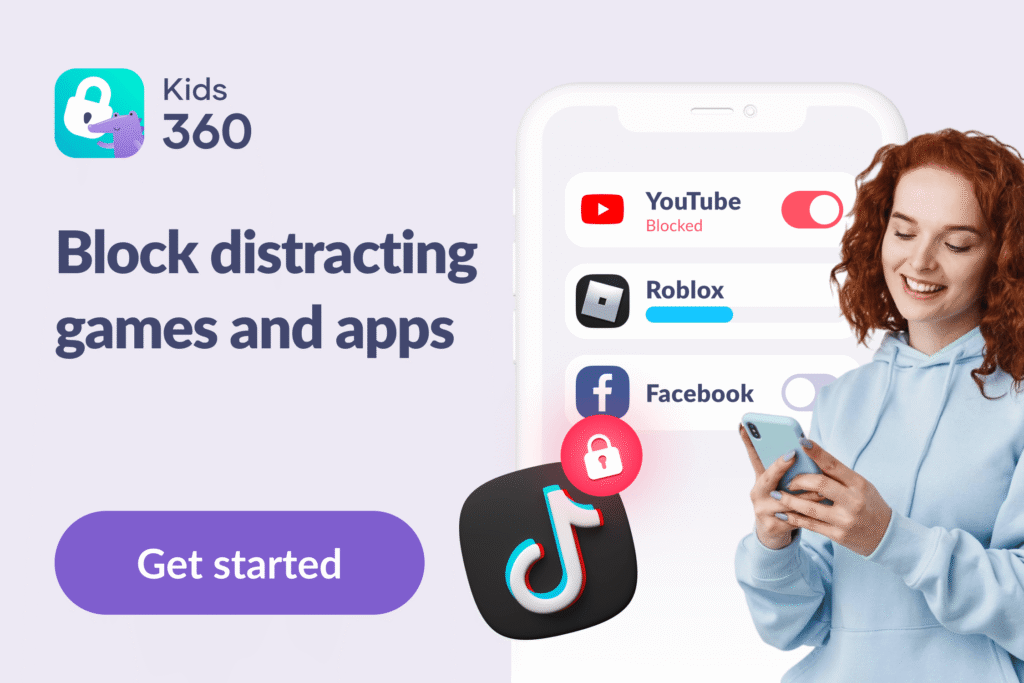
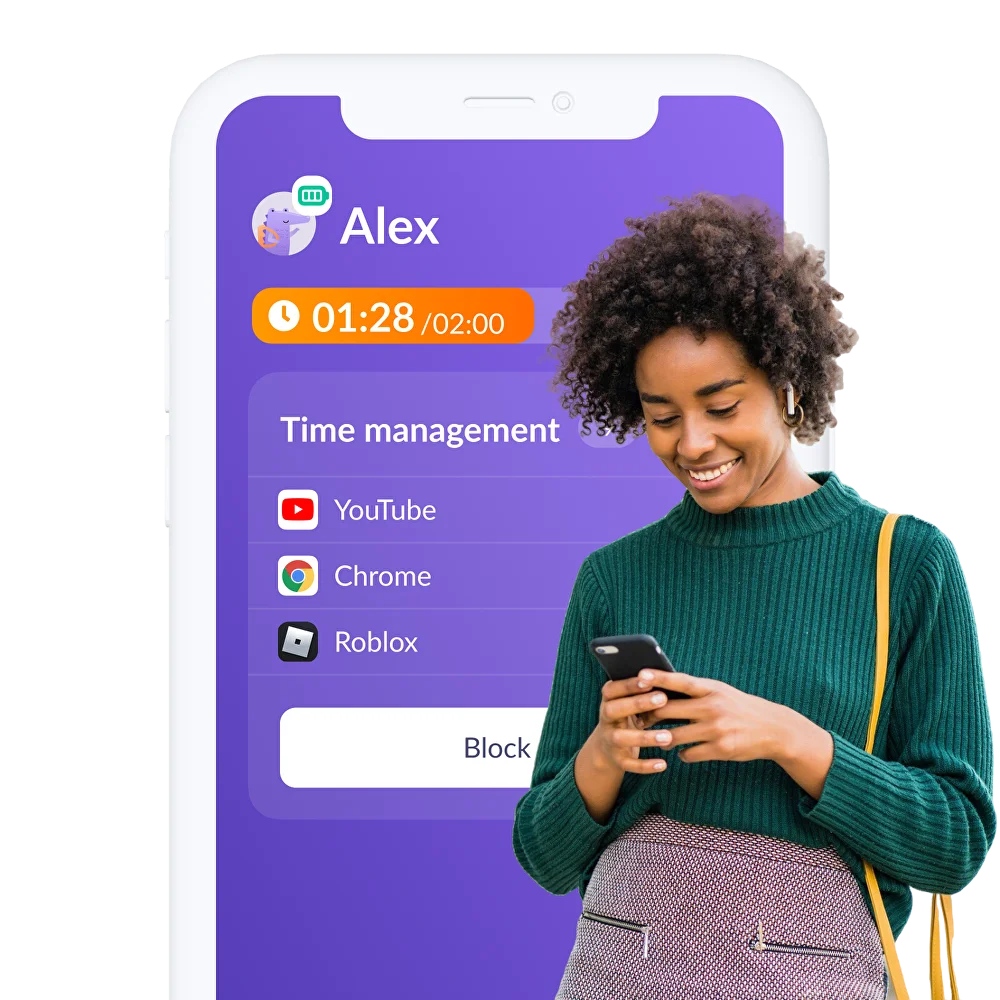
Kids360 does not decide whether a TikTok video is safe. It gives families practical control over when and how long the TikTok platform can be used, with the option to block it when needed.
Set a TikTok Screen-Time Limit
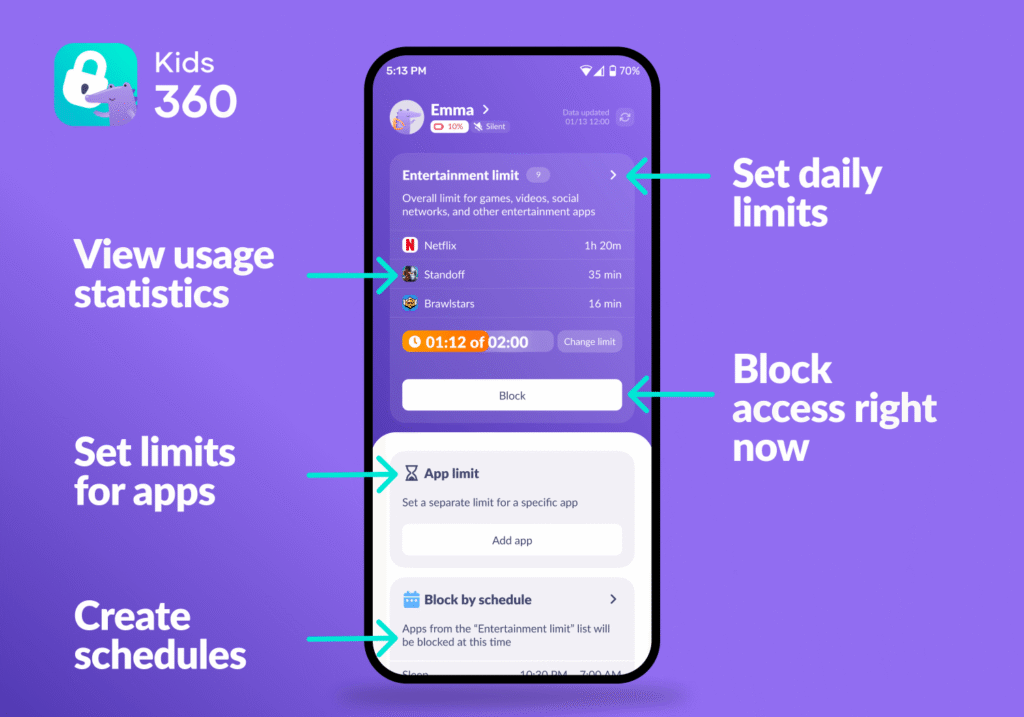
Families can use Kids360 screen-time limits to give TikTok a daily allowance without placing the same rule on every app.
A planned limit can leave room for TikTok after homework while creating a clear stopping point before sleep. It gives teens a predictable rule.
Create Study and Bedtime Schedules
A daily limit answers “how long,” while a schedule answers “when.” TikTok can be unavailable during lessons, homework, meals, the hour before bed, or overnight.
Schedules can differ by day and work around sports or family plans. They stop scrolling from crowding out sleep, education, real-world activities, and time with other people.
Block TikTok When a Stronger Boundary Is Needed
Kids360 app controls let parents block TikTok while the family reviews its rules. Blocking can create space after a risky incident, repeated secrecy, or difficulty following the agreement.
Explain the reason clearly so the child knows what must change before access is reconsidered.
Review App-Usage Patterns
Usage statistics show how much time a child spends in different apps. An increase in TikTok use can prompt a useful conversation.
Kids360 supports awareness without reading private conversations or identifying individual videos. Download Kids360 right now for free and agree on clearer rules with their child.
What to Do If a Child Tries a Dangerous Challenge
The first priority after any attempt is health, not punishment. Parents can follow these steps:
- Stop the act and remove the immediate danger.
- Check the child’s alertness, injuries, and possible exposure to medicine or chemicals.
- Seek urgent medical care for respiratory problems, loss of consciousness, seizures, serious burns, poisoning symptoms, or a head injury.
- Contact poison control or the appropriate local emergency service if a substance may have been swallowed or inhaled.
- Save the relevant messages or video without reposting them.
- Report the content through the platform’s tools.
- Ask what the child saw, who was involved, and whether anybody else may be at risk.
- Inform the school if classmates or its property were involved.
- Discuss what needs to change when everyone is calmer.
- Use Kids360 limits, schedules, or blocking tools if a stronger boundary is appropriate.
Anger may make teens hide the next incident. Calm action protects their health and supports prevention while still leaving room for fair consequences.
Safer TikTok Use Starts With an Ongoing Conversation
Parents do not need to know every trend. These dangers can affect children throughout life, so they need a simple rule for new challenges: pause, consider who could be harmed, and ask an adult before participating.
Kids360 supports that education with limits, schedules, and app controls. Clear boundaries protect kids from harmful online challenges while preserving enough trust to discuss worrying content.
Sources & References
- Concerning Social Media Challenges, American Academy of Pediatrics, 2024
- FDA Warns About Serious Problems With High Doses of the Allergy Medicine Diphenhydramine (Benadryl), FDA, 2020
- Benadryl: Side Effects, Interactions, and Overdose, Poison Control. 2023
- TikTok Challenges—Unintentional Injuries vs Suicide Attempts, JAMA Psychiatry, 2024
- Risky Business on TikTok: Content Analysis of Hazardous Challenges Among Youth, American Journal of Emergency Medicine, 2026
- Social Media Challenges Associated Paediatric Burns, Journal of Plastic, Reconstructive & Aesthetic Surgery, 2026
- Trends in Pediatric Diphenhydramine Cases Reported to US Poison Centers (2014–2023), AAP Pediatrics Open Science, 2025
- Anderson v. TikTok, U.S. Court of Appeals for the Third Circuit, 2024
- Teens Injured in ‘Skull-Breaker’ Challenge; BIAA Urges Parents to Intervene, Brain Injury Association of America, 2020
- Supporting Families With New Family Pairing Features, TikTok Newsroom, 2025
FAQ

The riskiest trends involve oxygen restriction, medication, fire, vehicles, falls, or deliberate injury. The Blackout Challenge, Benadryl Challenge, and similar risky social media challenges can cause severe injuries within minutes. Parents should discuss the danger without explaining how to perform these challenges and seek help after poisoning, burns, or unconsciousness.
Teenagers may participate because of curiosity, peer approval, rewards, or fear of exclusion. Their judgment and impulse control are still developing. A short video may make risky behavior look easy while hiding its effect on later life. Calm questions help parents understand what made the idea appealing and support prevention.
The Blackout Challenge is dangerous because restricting oxygen can cause fainting, seizures, brain injury, cardiac arrest, or death. Teens may lose consciousness without warning. Any incident needs a health assessment, while respiratory distress or unconsciousness requires emergency medical care.
Parents should stop the activity, assess the child, and get medical help when needed. Save relevant messages, report the content, and find out whether other kids were involved. Once the immediate risk passes, discuss what happened without humiliation. kids360 can apply new limits, schedules, or a temporary block while trust is rebuilt.
No. Many challenges are creative, charitable, or harmless. The Ice Bucket Challenge shows how social media can support a good cause. Families should judge each dare by its likely outcome. Other challenges should be avoided if they involve injury, substances, humiliation, privacy, or pressure to hide the activity.