Memes, TikTok, Gaming, Repeat: Is Your Child Chronically Online?



Your child knows every meme going around at school, quotes TikTok sounds you have never heard of, and somehow has an opinion on every internet drama. Their phone is always within reach, and “just five more minutes” can turn into another hour online.
You might jokingly call them chronically online. But what does that actually mean—and should parents be worried?
In this guide, we explain what it means for children and teens, how it differs from problematic screen use, when parents may want to pay closer attention, and how to create healthier boundaries without turning every phone conversation into an argument.
This article was reviewed and prepared together with Lilla Dale McManis, MEd, PhD, Child Psychologist
Key Takeaways
- “Chronically online” is informal terminology or slang, not a medical diagnosis or another name for internet addiction.
- Children can spend significant time online without it becoming harmful when sleep, school, friendships, and offline interests remain protected.
- Parents should look at what online behavior is replacing instead of judging screen time alone.
- Predictable rules for social media, gaming, and bedtime are easier to follow than limits introduced during an argument.
- Kids360 helps parents understand digital habits and apply agreed limits, schedules, and app controls consistently.
Table of Contents
What Does “Chronically Online” Mean?
The term chronically online describes someone who spends so much time online that internet culture becomes a significant part of how they communicate, think, and see the world. Their jokes, opinions, and references may be shaped by online discourse that people outside those spaces have never, or rarely, encountered.
A chronically online person might assume everyone understands a niche meme or knows why a post caused an argument. The label can also describe someone who treats a small website disagreement as important across the whole world.
That does not make chronically online a diagnosis. It is internet slang, often used humorously by Gen Z. It cannot reveal a mental health condition or clinically describe behavior.
Chronically Online Meaning and Common Usage

The meaning is less about exact hours and more about how a digital presence shapes life. Someone may spend significant time online for school, creativity, or friendships without becoming detached from real life.
The phrase is more likely when a person’s personality revolves around online trends or disputes. Internet culture has entered mainstream reporting too. Teen Vogue noted that Taylor Lorenz, a former New York Times technology reporter, later titled a book Extremely Online.
Chronically Online vs. Terminally Online vs. Extremely Online
These expressions overlap, but their tone differs. The table shows common usage rather than formal definitions:
| Term | Typical Meaning | Connotation |
|---|---|---|
| Chronically online | Deeply immersed in online culture and discussion | Usually humorous or critical |
| Terminally online | A more exaggerated version of chronically online | Strongly hyperbolic and exaggerated, often negative |
| Extremely online | Very active and fluent in internet culture | Humorous or neutral-to-negative |
| Heavy internet user | A person who spends a significant amount of time online | Neutral |
| Problematic social media use | Use involving loss of control and negative consequences | Research and health terminology |
The main point is that chronically online describes a relationship with the online world, not an illness. A child can follow every trend and still move comfortably between technology, school, family, and friends.
What Does Being Chronically Online Look Like in Kids and Teens?
For kids and teens, being chronically online can show up in everyday habits, conversations, and reactions. The key is not how many hours a child spends online, but how much online culture starts to shape their everyday life.
For example, a child might:
- Reach for their phone whenever there is a free moment. They check social media, messages, or group chats even when they are expected to focus on other activities.
- Struggle to disengage. They become upset when asked to leave a game, social media feed, or group chat.
- Bring internet culture into almost every conversation. Memes, creators, viral trends, and online jokes become their main references.
- Feel strongly connected to online communities. What happens in a game, fandom, group chat, or comment section can matter as much as what happens offline.
- Bring online drama into real life. A disagreement in a group chat or comment section affects their mood or relationships with friends.
- Treat every post as urgent. They feel that they must respond immediately or remain available at all times.
- Lose interest in other activities. Hobbies and plans that once mattered receive less attention.
- Repeat opinions without context. They copy language from platforms without fully understanding the issue behind it.
None of these behaviors automatically means that a child is chronically online. A child can spend a lot of time gaming, talking to friends, or following a favorite creator without it becoming a problem. What matters is what happens alongside that screen use.
When Does Being Online Become a Problem?
A useful way to look at the difference is to ask whether online activities fit into a child’s life or start pushing other parts of it aside.
| Healthy digital use | Potentially problematic pattern |
|---|---|
| Online activities fit into everyday life | Online activity dominates the day |
| The child switches between online and offline activities | The child is struggling to disengage |
| Sleep remains protected | Phone use repeatedly cuts into sleep |
| School responsibilities remain manageable | Online behavior interferes with school |
| Friendships exist online and offline | Most social interaction depends on being online |
| Screen time has reasonable boundaries | Limits constantly lead to conflict |
| The child has varied interests | Most free time revolves around a screen |
Calling only offline contacts “real friends” dismisses genuine online relationships. A healthier line is whether the child has varied social interaction and can join family, school, and community life without always needing a phone.
How Much Screen Time Is Too Much?
There is no universal number for every child. The American Academy of Pediatrics recommends considering the quality and context of media use, not only hours. Parents can also read Kids360’s guide to excessive screen time.
Instead of focusing only on the clock, look at what screen use replaces. Is the child getting enough sleep, physical activity, schoolwork, family time, and time with friends? Can they put the phone away and move on to something else? These questions often tell parents more than a screen-time total on its own.
Is Being Chronically Online Bad for Kids?
Not necessarily. Being chronically online may mean a child enjoys memes, games, or social media. Digital spaces can provide entertainment, creative inspiration, social interaction, learning resources, and belonging.
Concern is more appropriate when online behavior interferes with sleep, exercise, school, relationships, or mental health. Content matters too. Appearance comparisons on social media may affect self-esteem and anxiety differently from using the internet to learn.
The US Surgeon General’s advisory says evidence is insufficient to conclude that social media is safe for children and adolescents. Experiences differ, so the point is to consider the child, the content, and the effect on life rather than assume harm.
Another point is that online activity can shape self-esteem without changing a child’s whole reality. Social media platforms offer a window into a wider world; the practical point is that the meaning of the experience depends on context.
The negative impacts of being chronically online can be tempered when children have higher digital literacy and better online resilience. These translate into the ability to deal with a negative online experience online through effective coping and problem-solving.
Why Are Kids and Teens Spending So Much Time Online?
The internet is no longer a separate activity. Children find entertainment, talk with friends, have parasocial relationships, complete school tasks, and explore the world there.
A study from the Pew Research Center found that 46% of US teens were online almost constantly, while 96% used the internet daily. Being online frequently is therefore a common part of teenage life rather than, by itself, a sign of problematic use. At the same time, another Pew study found that 45% believed they spent too much time on social media, up from 36% in 2022.
Several factors can lead children to spend so much time online. No single aspect explains every child:
- Social connection: Friends continue talking through messaging apps long after school ends.
- Endless entertainment: Leading social media platforms always have another video, game, or post ready.
- Fear of missing out: Leaving a group conversation can feel like missing a joke or invitation.
- Boredom: A phone can fill even a short break immediately.
- Identity and community: Online platforms make it easy to find people with the same hobbies, experiences, or questions.
- Platform design: Notifications and recommendations encourage users to return constantly.
Children and teens are striving to meet their developmental needs as they interact with the world; for today’s kids, online and digital environments are a core part of that.
This is not simply a failure of willpower. Technology companies build leading platforms to hold attention. Understanding that reality helps parents set boundaries instead of blaming a child for finding the digital world appealing.
What Can Parents Do When a Child Is Always Online?
Parents do not need to begin with a ban. First, understand what the child does online and which part of life needs more room.
Step 1: Find Out What the Child Is Doing Online
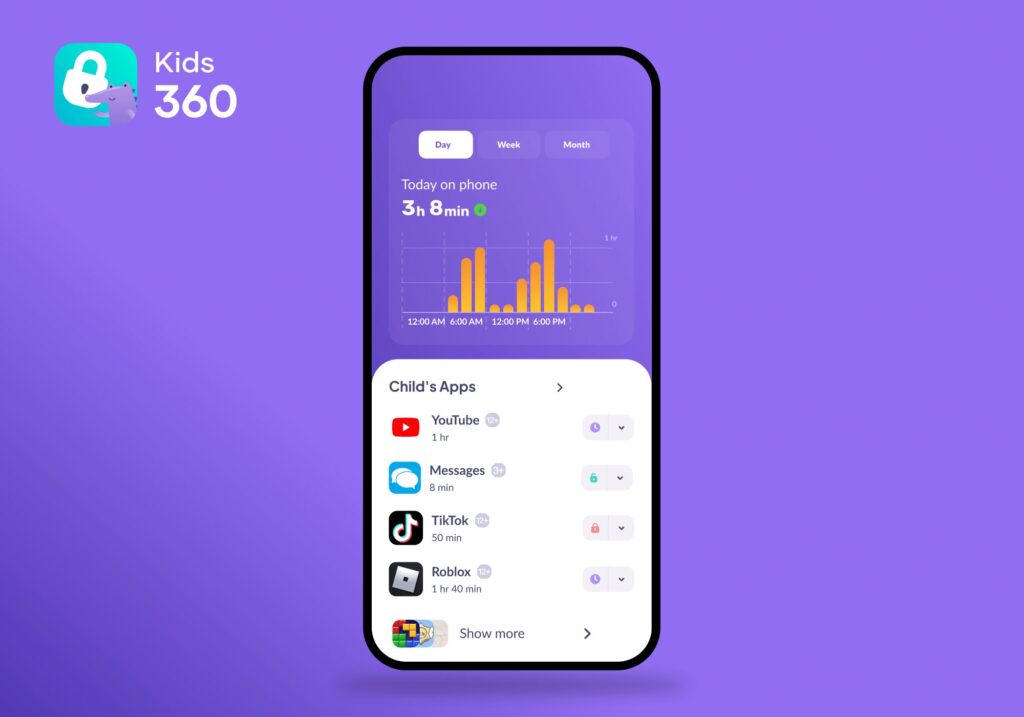
Hours alone do not show whether a child is creating, learning, playing with friends, messaging, or simply scrolling. Start with open questions about their favorite creators, games, and platforms rather than with criticism. Knowing what the child actually does online gives parents a clearer starting point for conversations and helps them discuss specific activities rather than relying on assumptions about how the child spends their time.
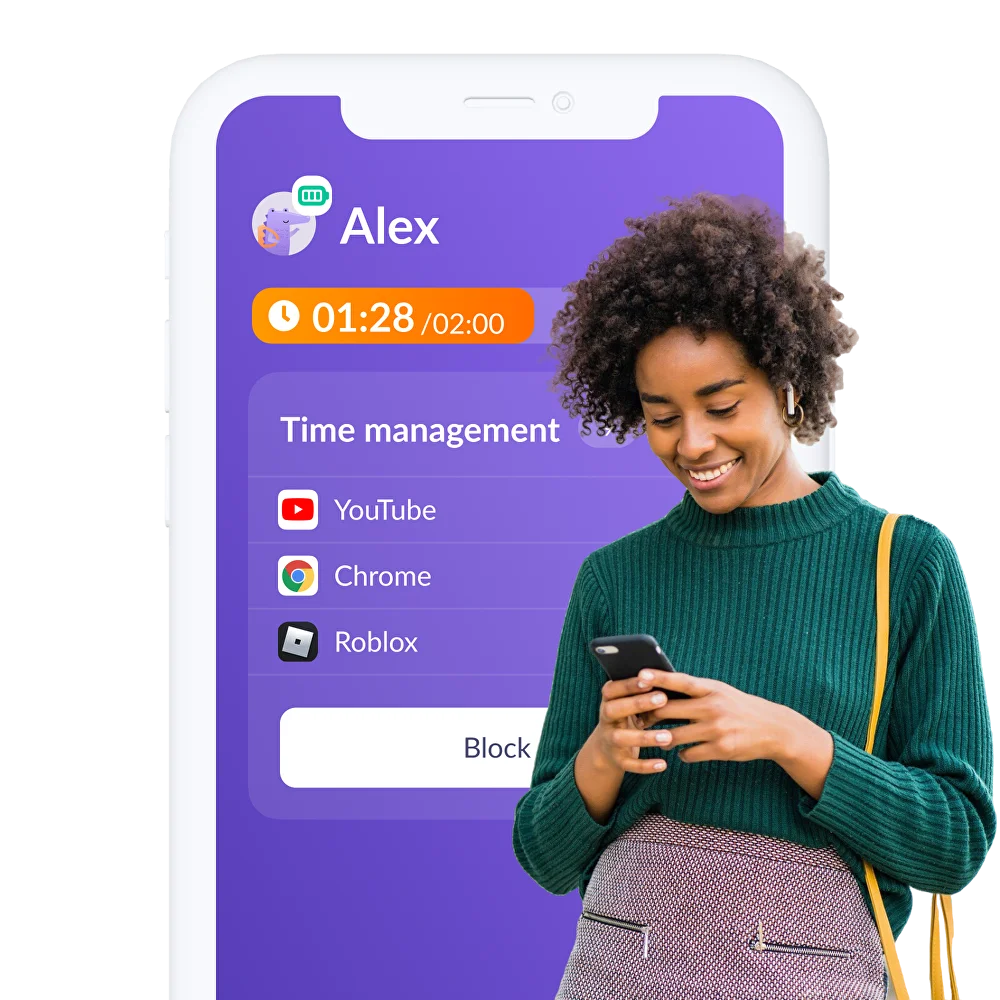
Parents can also use Kids360 usage reports to see how the child’s screen time is distributed across different types of activities and identify patterns over time. This information can give parents a more objective picture to refer to when talking with their child and deciding whether any limits need to change. Since daily use can vary, looking at patterns over time can be more useful than focusing on a single day.
Step 2: Identify What the Phone Is Replacing
Consider whether phone use is taking time away from sleep, homework, physical activity, conversations, hobbies, or unstructured free time. The goal is not to control every interaction with the phone, but to make sure screen time does not consistently crowd out other important parts of a child’s day.
Read also: Average Phone Screen Time by Age: A Simple Breakdown for Parents.
Step 3: Agree on Predictable Phone Rules
Useful rules might include:
- No recreational screen use during homework
- Phones charging outside bedrooms
- Screen-free family meals
- A clear daily allowance
- Planned review points instead of constant renegotiation
Children may still dislike a limit, but knowing when it starts, when it ends, and what happens when time runs out can make it easier to follow. Parents who are struggling can start with one or two changes rather than trying to reshape the entire routine at once. It’s also a good idea to involve children in setting the rules and review them together when their needs or routines change.
If keeping screen time within agreed limits is difficult, Kids360 can help parents make those boundaries more consistent. Parents can set daily screen time limits and schedules, while children can see how much time they have used and how much is left. Advance notifications let them know when their available time is running low, so the end of screen time is less likely to come as a surprise.
How Kids360 Can Help When a Child Is Always Online
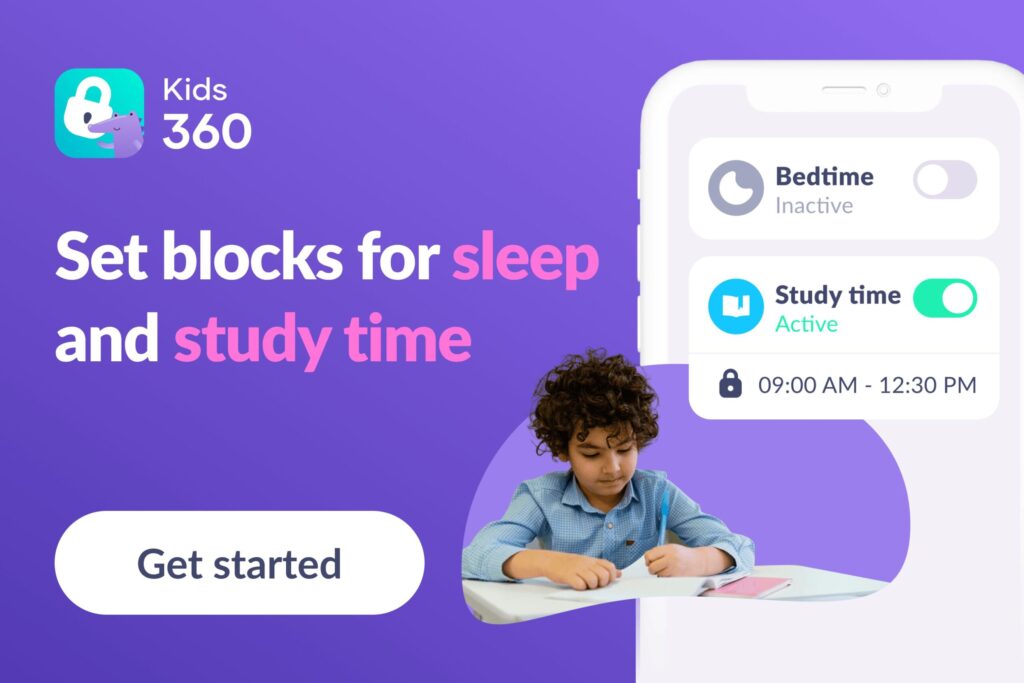
Kids360 helps parents turn family decisions into a routine the child can understand. Instead of watching the clock or repeatedly asking for the phone, parents can use the app to apply agreed boundaries consistently.
Its features address different parts of the “chronically online problem.” Parents can:
- Understand current habits: Usage reports help parents see where online time goes and whether one app or category takes up a significant amount of the day.
- Set an overall allowance: Screen time limits establish a clear daily boundary.
- Protect important times: Schedules can restrict unnecessary apps during sleep, study, meals, or family activities.
- Reduce specific distractions: App controls help parents manage games and social media when those platforms are dominating the routine.
- Limit internet access in specific apps: Parents can turn off internet access for selected apps to reduce online content, chats, or other connected features.
- Manage online activity: Safe Internet helps parents monitor search and YouTube activity and block inappropriate websites.
- Encourage breaks: Eye-protection reminders prompt children to step away after extended screen use.
- Offer positive motivation: Tasks for children allow them to earn extra screen time through parent-created activities and learning challenges.
- Keep safety and screen time together: Location tracking gives parents another way to stay connected with their child in the same app.
Kids360 does not replace a conversation. Parents still choose the limits and listen when the child is struggling. The app takes care of the technical side of those decisions, making agreed rules easier to apply consistently.
If your family wants to make screen time more predictable, you can download Kids360 for free and start by looking at your child’s current usage patterns.
How to Build a Healthier Digital Routine With Kids360
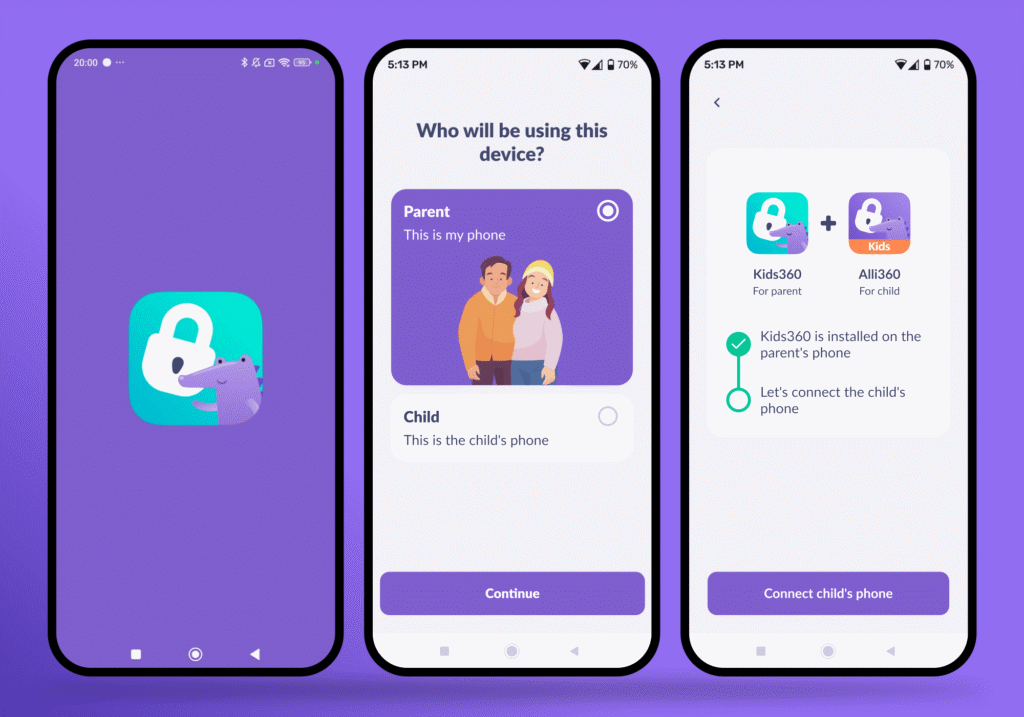
The routine should be discussed before the settings change. This keeps the child involved and gives the limits a clear purpose.
- Download Kids360 on the parent’s phone.
- Follow the prompts to install and connect the Alli360 companion app on the child’s device.
- Review how the child currently spends time online.
- Agree on a realistic daily allowance.
- Create schedules for bedtime, homework, meals, and other screen-free periods.
- Decide which activities may earn extra time.
- Check that the limits and schedules work as expected and that the child understands what will happen when screen time runs low.
- Review the routine after a week and adjust what is not working.
A healthy plan should grow with the child. School demands, interests, friendships, and responsibilities change, so families can revisit the settings rather than expecting one plan to work forever.
Should Parents Ban Social Media or Gaming?
Experts generally recommend using limits as part of a broader approach rather than relying on a complete ban. Jacqueline Nesi, PhD, a clinical psychologist who studies adolescents and social media, recommends combining rules with open conversations and gradually giving children more independence as they learn to use social media responsibly.
The American Psychological Association takes a similar position: for children around 10–14, it recommends ongoing parental monitoring, discussion, coaching, and developmentally appropriate limits. Its guidance also notes that social media is not inherently harmful or beneficial—the effects depend on the child, the content, and the context.
So a ban can be appropriate when there is a specific safety concern, such as cyberbullying or exposure to harmful content. For everyday overuse, experts point instead to clear boundaries, monitoring, and regular conversations as part of a more individualized approach.
You can think about it this way for the everyday and ordinary. Just as with other areas, if kids aren’t getting practice with guidance from a coach, they cannot as successfully gain the skills they’ll need when they inevitably are online.
When Should Parents Be Concerned?
One long gaming session is not enough to show a problem. A leading mental health concern is repeated disruption, not the slang label itself. Parents should look for signs of excessive screen time such as:
- Persistent sleep loss
- Falling school performance
- Withdrawal from offline activities
- Significant distress or conflict around reducing use
- Difficulty cutting back despite repeated attempts
- A noticeable decline in self-esteem
- Increased anxiety
Separate safety concerns, such as bullying, exploitation, or exposure to harmful content, may require a different response.
Parents can talk calmly and ask what feels difficult about logging off. If the behavior continues to interfere with daily functioning or mental health, a pediatrician or qualified professional can provide support and recommend resources.
Help Children Make Room for Life Beyond the Screen
Being chronically online is not automatically a problem. For many children and teens, the internet is where they socialize, play, learn, create, and keep up with the culture around them. Trying to remove it completely is neither realistic nor necessary.
What matters is whether online life leaves enough room for everything else. Sleep, school, movement, family relationships, hobbies, and time away from screens still need a place in a child’s routine.
Parents do not have to choose between total freedom and constant monitoring. A more practical approach is to understand what the child does online, agree on clear boundaries, and revisit those rules as they grow. Tools such as Kids360 can make those boundaries easier to apply consistently, while conversations help children gradually learn to manage their own screen use.
The goal is not to make a child less connected. It is to help them build a life that is not limited to what happens on a screen.
Sources & References
- Extremely Online, by Taylor Lorenz: New Book Shares a Social History of Social Media, Teen Vogue, 2023
- Screen Time Guidelines, American Academy of Pediatrics, 2025
- Bodies on Display: A Scoping Review of Appearance-Focused Social Media, Body Image, Self-Esteem, and Psychological Wellbeing in Adolescent Girls and Young Women, PubMed, 2026
- Social Media and Youth Mental Health, US Surgeon General, 2025
- Health Advisory on Social Media Use in Adolescence, American Psychological Association, 2023
- Teens, Social Media and Technology, Pew Research Center, 2024
- Pew Research Center: Teens, Social Media and Mental Health, Pew Research Center, 2025
- Multimethod assessment of parenting strategies for managing early adolescents' social media use, Online Library Wiley, 2026
- Speaking of Psychology: How social media affects teens’ mental health, with Jacqueline Nesi, PhD, American Psychological Association, 2023