Average Phone Screen Time by Age: A Simple Breakdown for Parents

For most families, the line between “online” and “real life” didn’t just blur; it disappeared. New data confirms that the global average for daily screen time has reached a massive 6 hours and 40 minutes. When you realize that accounts for nearly 40% of our total waking hours, it becomes clear that screen usage is now the primary architect of everyday life.
Monitoring the average phone screen time by age is no longer a technical curiosity; it is a critical barometer for a child’s mental and physical health. In our increasingly digital world, the traditional backyard playground has been largely swapped for internet-connected devices, forcing us to rethink what “growing up” actually looks like across various age groups.
Key Takeaways
- While younger children typically start with 2 hours of daily use, average daily screen time often surges to over 9 hours for Gen Z as they gain digital independence.
- When screen usage consistently reaches 7 hours, it frequently triggers mental health challenges and a decline in physical activity, marking the threshold for excessive screen time.
- For kids over nine, mobile devices are the primary gateway to social media, making screen time management a difficult task for any family to oversee manually.
- This is where parental control apps can help — they give parents better visibility into screen time and make it easier to manage without constant oversight.
- Kids360 replaces the “restriction conflict” — the constant back-and-forth between parents limiting screen time and kids pushing against those limits — by allowing kids to earn screen engagement through physical health goals and cognitive development tasks.
Contents:
Global Screen Time Trends: How the World Changed in 2026
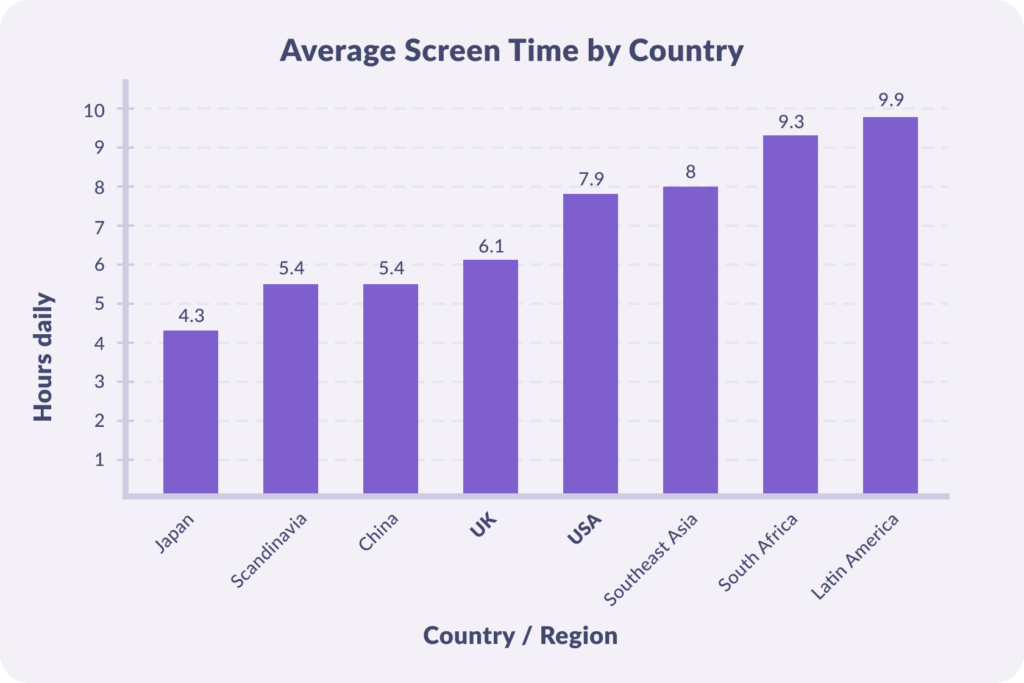
The global screen time overview for this year shows that people spend more time on social media than ever before. While we used to worry about the average person spending 4 hours on a device, the new global average for average daily screen time has climbed to nearly 7 hours.
The growth didn’t happen overnight. Over the past decade, screen time has been steadily increasing, with only small dips after pandemic peaks:
- In 2013, the global average was about 6 hours and 9 minutes per day
- By 2017, it rose to 6 hours 46 minutes
- During the pandemic (2020–2021), it peaked at nearly 6 hours and 54 minutes
- In 2024–2025, it stabilized around 6 hours 40–6 hours 54 minutes daily
Overall, that’s an increase of roughly 45–50 minutes per day over the last decade, driven mainly by smartphones, social media, and streaming services.
This isn’t just a US phenomenon; the US average screen time is high, but global screen time is rising in lower-income households as mobile devices become the primary way to access the internet.
Here’s how daily screen time compares across regions and countries:
| Country / Region | Avg Daily Screen Time |
|---|---|
| South Africa | ~9.3 hours |
| Latin America (Brazil, Chile, Colombia, Argentina) | ~8.4-9.9 hours |
| Southeast Asia (Malaysia, Thailand, Indonesia) | ~7-8 hours |
| United States | ~7-7.9 hours |
| United Kingdom | ~6.1 hours |
| China | ~5.4 hours |
| Scandinavia (Norway, Sweden, Finland, Denmark) | ~5.1-5.4 hours |
| Japan | ~4.3 hours |
Tracking Average Time Spent on Devices
Gaining a sense of balance in an increasingly online world starts with looking at the primary use for digital devices, and how they are affecting us; they are the primary lens through which we view everyday life.
What “Screen Time” Actually Means
Technically, “screen time” is the total time spent staring at internet-connected devices, from smartphones to computer screens. However, the real insight for a family is the difference between how that time is used:
- Active engagement: This is “brain-on” time, such as coding on computer screens, digital art, or educational use.
- Passive consumption: This is “lean-back” screen time consumption, like scrolling through social media or binging streaming services.
The Mechanics of Digital Tracking
Modern internet-connected devices monitor digital habits with absolute precision. Most mobile devices now log every screen wake and every minute spent on social media apps. For various age groups, these screen time statistics act as an early warning system, helping parents spot when a healthy interest turns into prolonged screen exposure that threatens a child’s well-being.
What is the Average Person’s Daily Screen Time?
In 2026, the global average for daily screen time had hit 6 hours and 40 minutes.
- The typical average person spends 6 hours and 40 minutes a day online.
- The US average screen time is slightly higher, sitting at 7 hours and 11 minutes.
- While baby boomers spend about 5 hours online, Gen Z often hits the 9-hour mark.
- For younger users, this often consumes nearly half of their waking hours.
When these numbers reach the level of excessive screen time, they play a significant role in disrupting mental and physical health. This makes proactive screen time management a necessity for the modern family.
Average Screen Time by Age
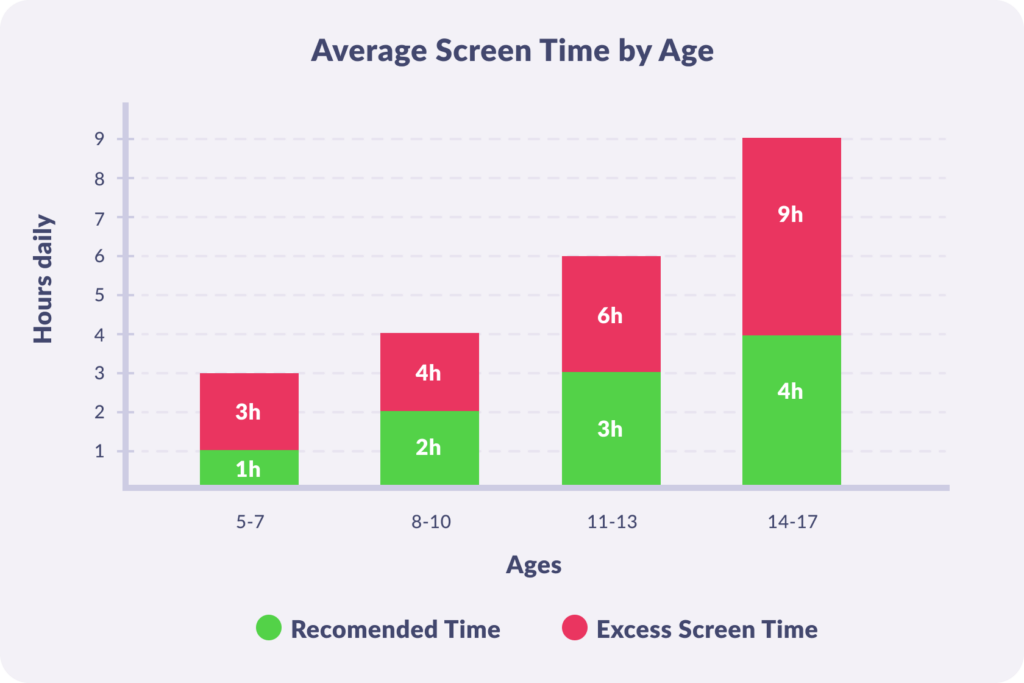
To determine if a child’s digital habits are healthy, we must analyze average screen time statistics through the lens of developmental milestones. Daily screen time shifts dramatically as children transition from early childhood into the high-pressure social world of Gen Z.
Ages 5–7: The Early Tablet Years
For younger children, screen usage centers on portability, making tablets the top choice among internet-connected devices. At this stage, the average daily screen time typically hovers around 2–3 hours.
Ages 8–10: Transitioning to Independence
As kids grow, average screen time climbs toward 4 hours daily. This “hand-me-down” phase often involves receiving a first smartphone, moving away from shared computer screens to private screen time consumption.
A typical day includes 2 hours of playing video games and another 2 hours of streaming, totaling 4 hours.
Ages 11–13: The Social Gateway
In the “tween” years, screen time among children jumps to an average of 5–6 hours as devices become essential for social survival.
A 12-year-old often logs 2 hours of computer screen time for school and 4 hours of high screen usage on social media and online video games.
Ages 14–17: The Peak of Gen Z Engagement
For Gen Z, average phone screen time peaks at roughly 8–9 hours daily. For these younger generations, the phone is an extension of identity, and 9 hours of screen habits is often the peer “norm”.
- Total screens daily are often split between social media apps, playing video games, and streaming services.
- Spending 9 hours online means using nearly half of one’s waking hours on a device. This prolonged screen exposure frequently displaces physical activity, leading to excessive screen time that hits 7 hours or 8 hours consistently.
- Seeing 9 hours on a report is a loud signal that a family needs to limit screen time to prevent mental health challenges.
Where Does Screen Time Go? A Breakdown of Kids’ Digital Habits
To manage digital habits, parents must look beyond total screen time and identify which platforms are actually consuming their attention. In our increasingly digital world, a child might spend an average of 6 hours online, but that time is usually fragmented across various high-traffic categories.
Screen Time by Device
The hardware a child uses often dictates how much screen time they consume. Smartphones are now the “main device” for kids aged 9–14 and are the hardest to track due to their portable, private nature.
| Device | Primary Usage & Audience |
|---|---|
| Smartphones | Main portal for Gen Z; used for social media apps, messaging & chats, and gaming. |
| Tablets | Common for younger children to watch TV, YouTube Kids, and educational use. |
| TV/Streaming | Significant for all age groups; people spend roughly 2 hours a day on passive viewing. |
| Computers | Reserved mostly for schoolwork, high-end playing video games, and educational use. |
Screen Time by Activity
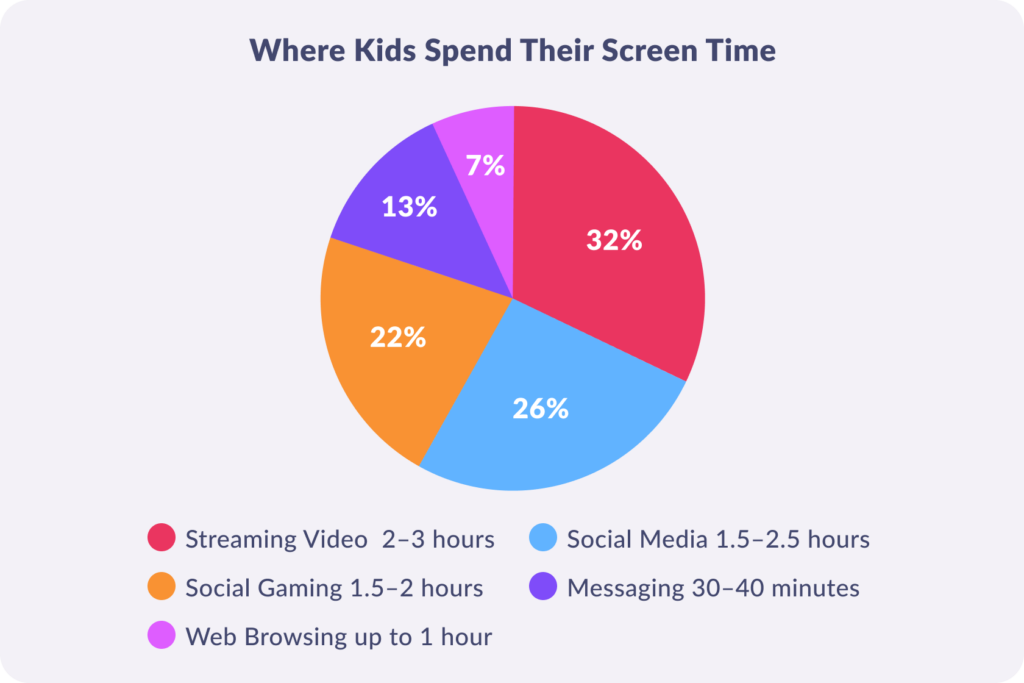
Entertainment and social connection are the primary drivers of high screen usage in 2026:
- Social Media: For younger generations, platforms like TikTok and Instagram act as a digital town square. It is common for a teen to spend 1.5-2.5 hours a day on a single app, leading to prolonged screen exposure.
- Streaming Video: Watching TV via streaming services remains a staple of everyday life. Younger children may spend 2-3 hours daily on YouTube alone.
- Social Gaming: Playing video games is now a social environment. A child might spend 1.5-2 hours a day gaming.
- Messaging: Constant communication via apps like WhatsApp or Discord adds up throughout the day, typically around 30–40 minutes daily, often spread across many short interactions.
- Web Browsing: General browsing—searching, reading, scrolling through websites or school-related content—usually contributes up to 1 hour per day, often in fragmented sessions rather than one continuous block.
What Experts Recommend (Healthy Screen Time Limits)
There’s no universal “perfect number” of screen hours that works for every child. Most modern pediatric guidance has actually moved away from rigid limits and toward something more practical: balance, content quality, and the everyday context around screen use.
That said, major health organizations still give age-based recommendations that can help parents orient themselves.
For babies and toddlers, the advice is fairly consistent. The American Academy of Pediatrics (AAP) recommends avoiding screens altogether for children under 18 months (except video chatting), and keeping it to around 1 hour per day of high-quality, educational content for children aged 2–5, ideally watched together with an adult. The focus here isn’t just “how much,” but what screens replace—because at this age, every minute is competing with play, sleep, movement, and real-world discovery that are essential for brain development.
For school-age children and teenagers, experts become more flexible. Instead of strict time caps, they emphasize a more grounded principle: screen time shouldn’t push out the basics of healthy development—sleep, physical activity, schoolwork, and real face-to-face connection. In other words, it’s less about counting hours and more about whether life still feels balanced when screens are part of it.
Impact of Excessive Screen Time on Child Development
When does average daily screen time become excessive screen time? Experts and average screen time statistics suggest that when screen time consistently hits 7 hours or 9 hours, the risks to mental and physical health increase exponentially!
When Does Screen Time Become Excessive?
Research does not define a single “safe cutoff,” but studies consistently show that higher daily screen time (especially >4 hours) is associated with worse health and developmental outcomes, including sleep problems and mental health risks.
Instead of a strict number, experts focus on patterns of use (especially evening use, bedtime use, and replacement of sleep or physical activity).
Cognitive and Emotional Development
Excessive screen use has been linked to:
- Reduced attention and concentration
- Poorer academic performance
- Increased risk of anxiety, depression, and behavioral problems
Large population studies show associations between high screen time and increased risks of mental health issues such as anxiety, depression, and ADHD-related symptoms, partly mediated by sleep and reduced physical activity.
In younger children, higher screen exposure is also associated with weaker language and school readiness skills, likely due to reduced hands-on learning and social interaction.
Physical Health Concerns
High screen usage is a leading cause of sedentary behavior. If a child spends hours a day on social media, they are likely missing out on the physical activity needed for healthy bone and muscle development.
Furthermore, blue light from computer screens and mobile devices used late at night can severely disrupt sleep patterns.
How to Actually Understand Your Child’s Screen Time
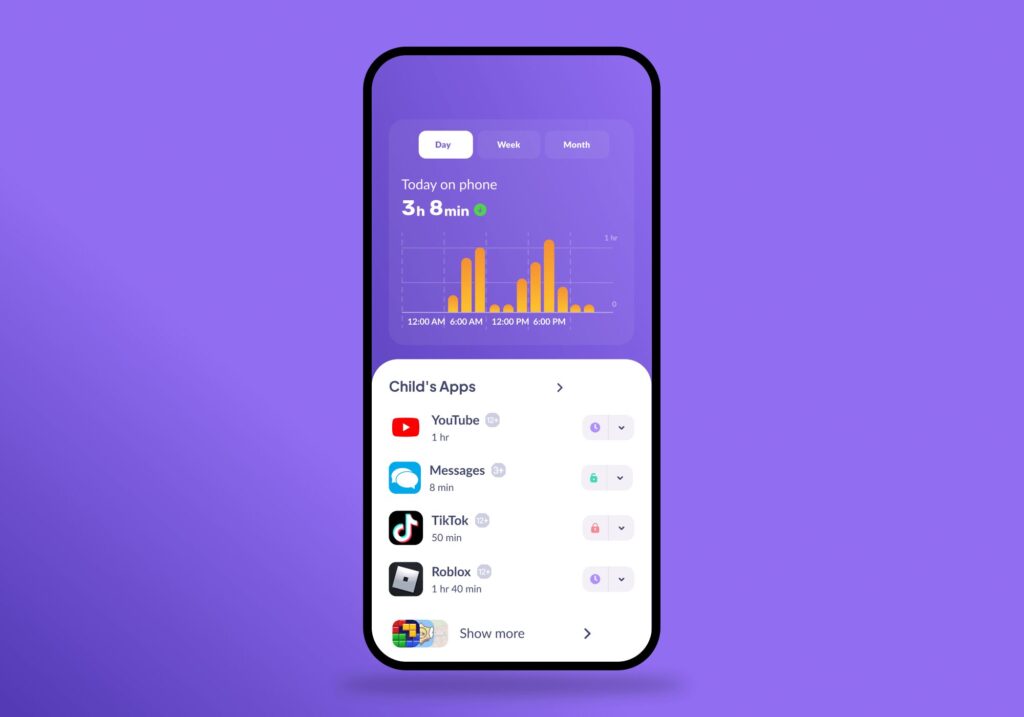
Most parents don’t actually struggle with “too much screen time” — they struggle with not really knowing what “too much” looks like in their own home. Phones are everywhere, apps run in the background, and what feels like “a little YouTube” often turns into hours of scattered scrolling, gaming, and switching between apps.
That’s why expert guidance today is less about guessing and more about measuring first, reacting second.
You can’t manage what you don’t see. And screen time, on a modern smartphone, is rarely one single activity—it’s a mix of messaging, short videos, games, social apps, and background usage that adds up quietly throughout the day.
This is where tools like the Kids360 app become practical, not just technical. Instead of relying on assumptions (“I think it was about two hours today”), a parental dashboard shows real, app-level statistics—how much time is spent in specific apps, when usage spikes happen, and how daily patterns change over time.
This kind of data doesn’t replace parenting decisions—it grounds them. Before setting limits, removing access, or drawing conclusions, experts increasingly recommend first understanding the baseline: what is actually happening, consistently, over time.
How Kids360 Helps Parents Manage Screen Time
In an increasingly digital world, simply taking the phone away often leads to conflict and resentment. Kids360 offers a different path: screen time management built on well-being and motivation rather than just restriction. By choosing Kids360, parents embrace a harmonious blend of control and care that helps children grow while providing peace of mind.
Turning Screen Time into a Productive Resource
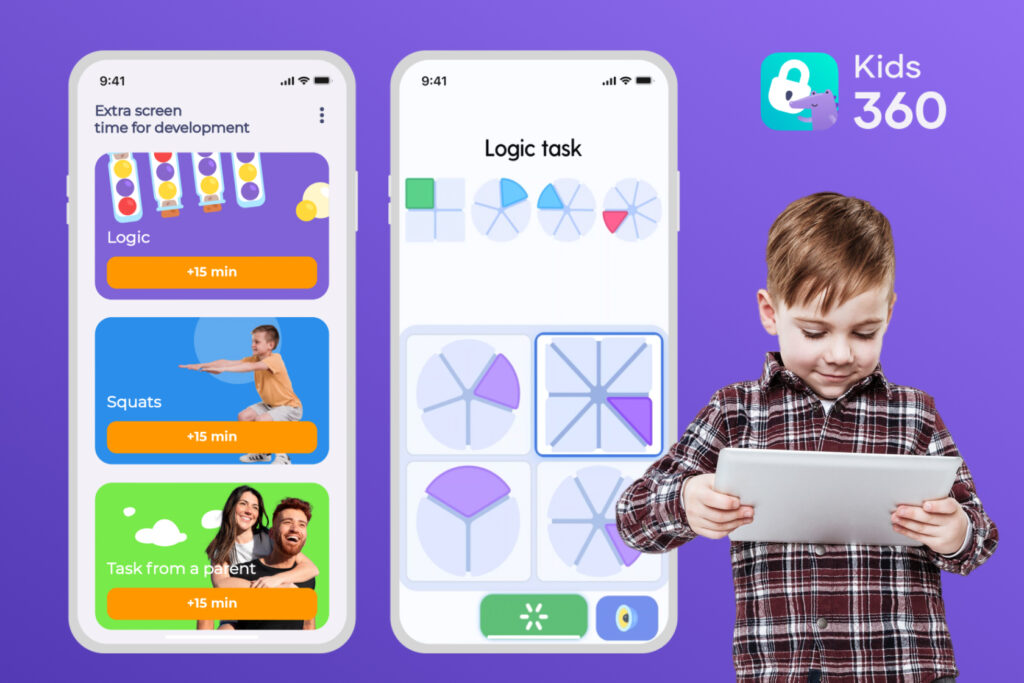
Kids360 isn’t just an app blocker; it’s a “co-pilot” for screen habits. Is teachs younger generations that time spent on their device is a valuable resource that can be earned through effort.
- The app features a library of 4,400+ built-in logic and thinking challenges designed to motivate children toward self-improvement. For every 5 solved tasks in one category, the child earns 5 extra minutes of phone time, up to 20 minutes per day.
- To prevent excessive screen time from affecting physical health, Kids360 uses an AI Trainer. The child performs exercises like squats or push-ups in front of the smartphone camera, which the AI analyzes in real-time to confirm completion. 5 repetitions equal 10 minutes of screen time.
- The app synchronizes with the phone’s step counter to encourage an active lifestyle in the real world. If the child walks 7,000 steps in a day, the bonus is granted automatically.
- Parents can serve as the primary moderators by creating a personalized list of chores or activities. They decide exactly how much extra time is earned, typically ranging from 5 to 30 minutes.
Comprehensive Safety and Monitoring Tools
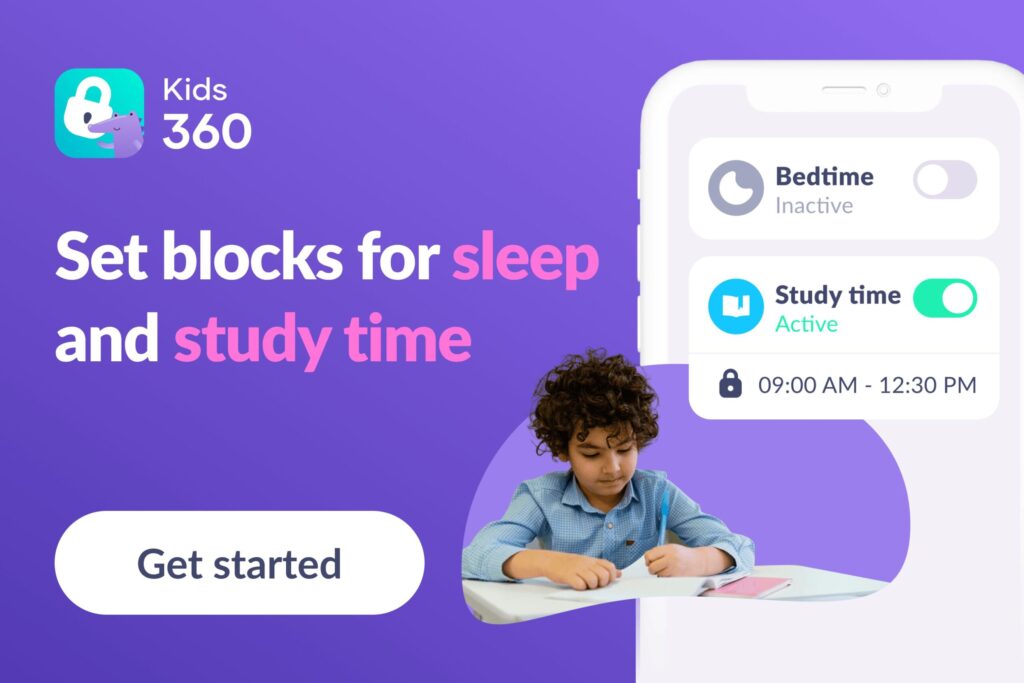
Beyond motivation and reward systems, Kids360 also gives parents a clear, structured view of how their child actually uses their device—and tools to gently guide healthier habits without constant conflict.
- Mobile app statistics. Parents can see exactly where screen time goes—whether it’s social media, games, video platforms, or other apps. This helps move from “my child is always on the phone” to a clear, detailed picture of real usage.
- Daily reports & habit patterns. Instead of isolated snapshots, Kids360 provides daily summaries and long-term trends. Parents can identify when screen use spikes, how weekends differ from school days, and what habits are forming over time.
- Screen time limits & controls. Parents can set flexible limits: block specific apps, restrict entire categories like games or social media, or lock the device completely when needed. It’s a way to create structure without constant negotiation.
- Schedules & downtime rules. Screen access can be automatically managed around daily routines—school hours, homework time, and bedtime. Internet access can also be paused when focus or rest is needed.
- Safety features & content awareness. The app provides visibility into browser activity and YouTube history, helping parents understand what content is being consumed. It also allows blocking of 18+ or inappropriate websites for safer browsing.
- Healthy break reminders. To support healthier digital habits, Kids360 can prompt children to take breaks if they’ve been continuously looking at the screen for extended periods—helping prevent fatigue and encouraging balance.
- Offline safety features. With Kids360, parents can stay connected and reassured even without constant contact: real-time GPS location tracking (works even when the phone isn’t actively used) and a loud signal feature that rings the child’s phone at full volume—even in silent or Do Not Disturb mode.
Take control of screen time with clarity, not guesswork. Build healthier digital habits for your child with tools designed for modern parenting. Download Kids360 and start today!
Other Practical Tips to Reduce Screen Time
Managing screen habits should not be about creating a whole bunch of restrictions, and instead should be about creating a place where the whole family can thrive. Besides using Kids360 to limit screen time, here are several practical strategies to reduce high screen usage and foster better well-being:
Establish “No-Screen” Zones
Designate areas like the dining table or bedrooms as phone-free spaces to prevent prolonged screen exposure during sleep and meals.
Create a Digital Sunset
Encourage the whole family to put away internet-connected devices at least one hour before bed to protect mental and physical health.
Model Healthy Habits
Children often mimic the digital habits of their parents, so demonstrating balanced screen usage yourself is vital.
Prioritize Physical Activity
Replace an hour of playing video games with outdoor sports or a family walk to ensure physical health isn’t sidelined.
Use “Analog” Alternatives
Keep books, board games, or art supplies easily accessible to provide an alternative to watching TV or scrolling through social media apps.
Navigating the Future of Your Child’s Digital Habits
As we navigate this era where things are increasingly more digital, finding the right balance for children’s screen time remains an area of life where we need to stay conscious. While the average phone screen time by age may show a trend toward 9 hours or more for Gen Z, this does not have to be the permanent reality for your household.
Tools like Kids360 offer a “care-first” approach that moves beyond simple blocking. By turning screen engagement into a reward for cognitive development and physical activity, you empower your child to manage their own time spent wisely. Transforming daily screen usage from a source of conflict into a system of motivation is the quickest way to ensure a balanced, healthy future for the next generation.
Sources & References
- Average Amount of Screen Time for Children and Young Adults, AAP, 2026
- Screen Time Guidelines, AAP, 2026
- Screen Time Statistics and Trends 2026, Demandsage, 2026
- Average Daily Screen Time by Age Group, Magnet ABA, 2025
- Screen Time Statistics 2026: Global Trends and Key Stats, Twinstrata, 2026
- Screen Time Statistics 2026: How Much Time Do We Really Spend on Our Phones?, Screen Time Buddy, 2026
- Home lighting, blue-light filtering, and their effects on melatonin suppression, Scientific Reports, 2026
- Average Screen Time Statistics By Age, Generation, Region and Facts (2025), Sci-Tech Today, 2025
- Screen Time Report: Annual Analysis & Insights 2025, Time Out, 2025
- Digital 2025: Global Overview Report, Datareportal, 2025
- Revealing Average Screen Time Statistics, Backlinko, 2026
- Excessive Screen Time is Associated with Mental Health Problems and ADHD in US Children and Adolescents: Physical Activity and Sleep as Parallel Mediators, Cornell University, 2025
- ssociations between physical activity, screen time, sleep time and selected academic skills in 8/9-year-old children, BMC Public Health, 2023
- Toddlers given 90 mins of screen time per day are falling behind, new study shows, Net Mums, 2025