Social Media Bans for Kids Explained: What Parents Need to Know

While governments are rushing to restrict access to the internet, a massive gap has opened up between law and reality. In Australia, a recent study revealed a staggering truth: four out of five teenagers under the age of 16 managed to completely bypass the government’s new online blockades to keep using their favorite apps anyway.
As the UK government steps up its own plans to enforce a sweeping national social media ban, parents are learning a tough lesson. State laws can penalize tech giants, but they cannot police a child’s phone. For parents, understanding these shifting legal frameworks and knowing how to protect children’s wellbeing at home is more critical than ever.
Key Takeaways
- Major nations are transitioning from self-policed age limits to government-enforced restrictions to block underage access.
- Tech companies now face massive fines if they do not implement highly effective age assurance technologies.
- Pure messaging services and educational tools remain accessible so young people can maintain vital peer and family social interaction.
- Legislative bans cannot completely eliminate online risks; proactive household boundaries and monitoring remain essential.
- Utilizing dedicated parental control applications like Kids360 allows families to bridge the gap between state laws and home safety.
Table of Contents
What Is a Social Media Ban?
A social media ban refers to state-level legislation that legally prohibits specific age groups from creating or maintaining social media accounts. This is fundamentally different from traditional social media age restrictions. For years, platforms maintained a self-governed minimum age of 13, largely driven by data privacy laws rather than child safety and social media age restrictions.
However, these corporate age restrictions relied on an easily bypassed honor system during sign-up. A legislative media ban shifts the responsibility entirely onto the social media companies. Under these new laws, platforms face severe legal and financial penalties if they fail to prevent children under the target age from accessing social media.
What Is Happening in the UK and Australia, and Why
The momentum behind these strict online safety frameworks stems primarily from coordinated regulatory moves in Australia and the United Kingdom. Both nations have declared that self-regulation by tech companies has failed to protect children from online harms.
Australia
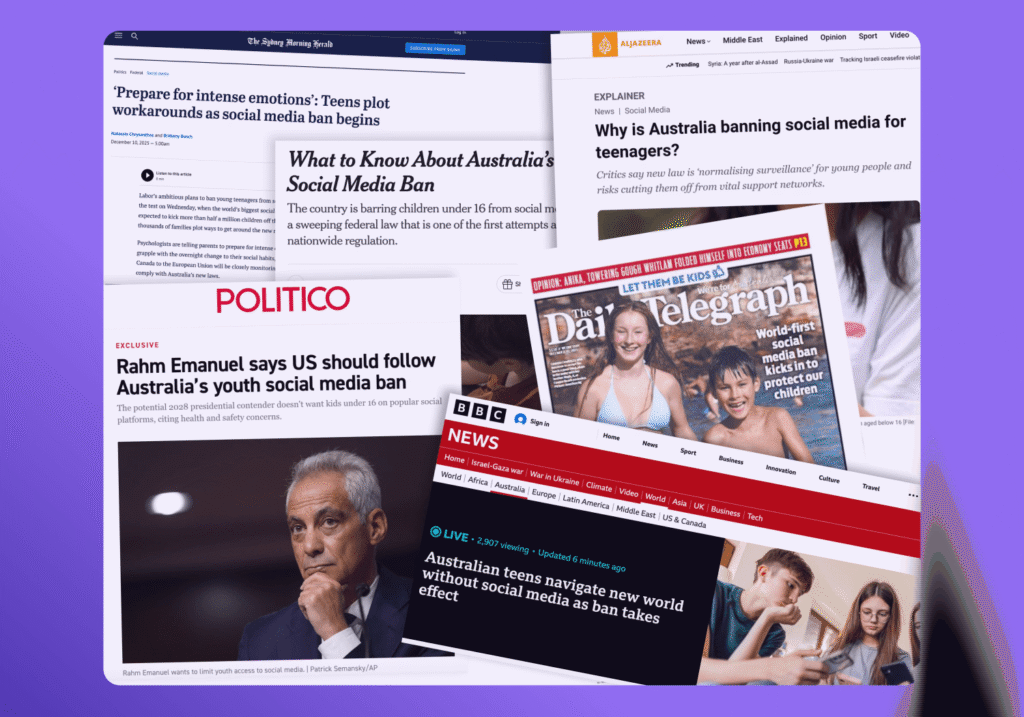
Australia has established itself as the global pioneer by introducing the Online Safety Amendment (Social Media Minimum Age) Act. The legislation sets a minimum age of 16 for creating accounts on certain social media platforms and requires companies to take reasonable steps to prevent underage users from holding accounts.
Importantly, the legislation ensures that no penalties fall on parents or young people themselves. Instead, social media companies face fines of up to $50 million AUD if they fail to take reasonable steps to prevent children from holding active accounts. The Australian Prime Minister stated that the measure is necessary to combat the severe online risks threatening the mental health of developing teenagers.
United Kingdom
Following a similar trajectory, the UK government has significantly strengthened its online safety framework through the Online Safety Act. But, unlike Australia, the UK has not introduced a blanket social media ban for under-16s. Instead, its approach focuses on making platforms prove that they are taking effective steps to protect children.
The UK approach leverages the power of Ofcom, the media regulator, to enforce the rules established under the Online Safety Act. Tech companies are legally required to deploy highly effective age assurance technologies to verify user identity. Platforms that continue to allow underage users to access their feeds face multi-billion-pound penalties.
The main focus of the UK’s strategy is reducing children’s exposure to harmful online experiences, including content related to self-harm, eating disorders, cyberbullying, and other forms of abuse. Rather than removing teenagers from social platforms completely, the UK model aims to make digital spaces safer through stronger regulation and platform accountability.
What Other Countries Are Banning or Restricting Social Media: Global Trends
The legislative wave is not confined to the UK and Australia, as a broader cultural shift is occurring globally.
| Country | Initiative | Status | Year introduced / planned |
|---|---|---|---|
| 🇦🇺 Australia | Minimum age of 16 for social media accounts; platforms must take reasonable steps to prevent underage accounts | Implemented | 2025 |
| 🇬🇧 United Kingdom | Online Safety Act; stronger age verification requirements and platform responsibility for protecting children | Implemented gradually | 2023–2026 |
| 🇫🇷 France | “Digital majority” law requiring parental consent for social media users under 15 | Implemented, enforcement developing | 2023 |
| 🇪🇺 European Union | Digital Services Act requirements and discussions around stronger age assurance standards for minors | Implemented / ongoing development | 2023–2026 |
| 🇺🇸 United States | State-level laws requiring parental consent, age verification, or restrictions for minors on social media | Partially implemented; many laws under legal review | 2023–2026 |
| 🇨🇳 China | Restrictions on minors’ online gaming time and stronger youth protection requirements for digital platforms | Implemented | 2019–2021 (expanded later) |
| 🇰🇷 South Korea | Regulations aimed at limiting excessive online gaming and protecting minors online | Implemented, with changes over time | 2011 onward |
Across the European Union, several member states are pushing for unified online safety standards that mandate strict age checks. For instance, France has previously experimented with a “digital majority” law requiring parental consent for users under 15, and discussions are now underway to tighten these restrictions into an outright ban for younger demographics.
In the United States, individual state legislatures are mounting immense pressure on digital platforms. Multiple states have passed laws attempting to restrict minors’ access to social media or mandate verified parental consent. These regional pieces of legislation frequently spark intense legal battles regarding human rights, freedom of speech, and children’s rights. Despite these legal hurdles, the global trend clearly signals that governments are no longer willing to let tech companies dictate the parameters of online safety.
In Asia, governments have generally focused less on banning social media outright and more on limiting harmful digital habits. China has introduced some of the world’s strictest rules around children’s online activity, including limits on gaming time for minors and requirements for platforms to implement youth protection measures. South Korea has also taken steps to regulate children’s digital consumption, particularly around online gaming and excessive screen use.
While the details differ from country to country, the global trend is clear: governments are increasingly unwilling to leave children’s online safety entirely in the hands of technology companies. Instead, they are pushing platforms to introduce stronger age controls, safer defaults, and more responsibility for protecting young users.
What Apps Are Getting Banned in 2026? The List of Age-Restricted Platforms
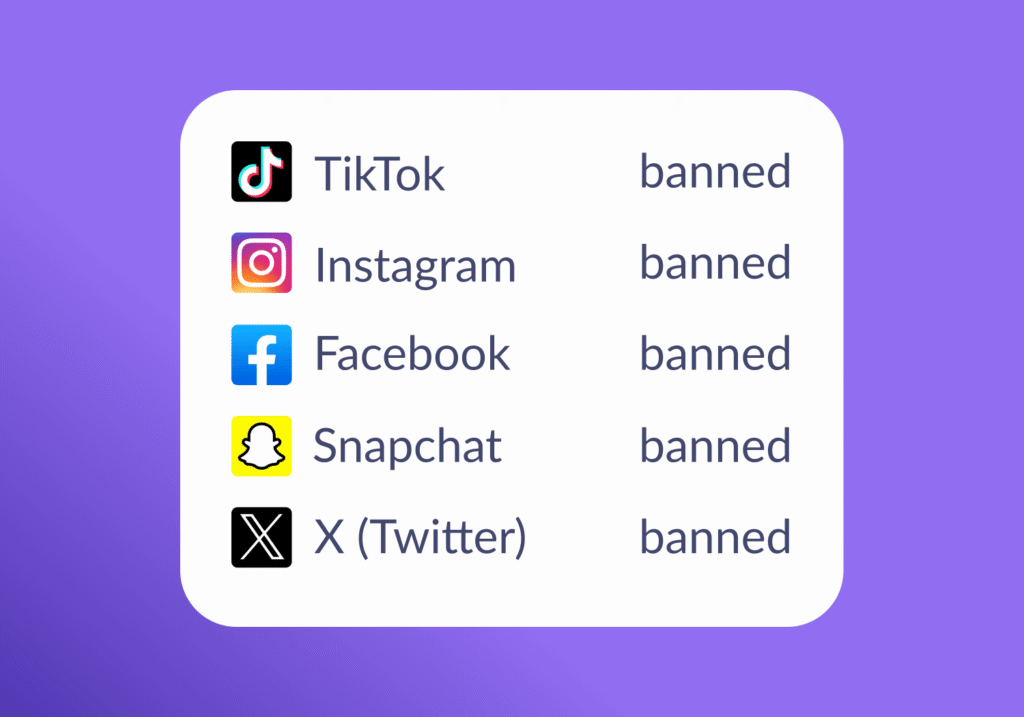
Navigating which digital tools are restricted under the new 2026 frameworks can be confusing for families. Governments have carefully distinguished between platforms that drive compulsive behavior and online services that provide necessary utility.
The following table outlines how major applications are categorized under the latest strict age-related regulations:
| App / Platform | Regulatory Status for Under-16s | Specific Classification & Impact |
|---|---|---|
| TikTok | Banned | Core social media platform; restricted due to algorithm-driven feeds and potentially addictive scrolling. |
| Banned | Social media platform; underage accounts are prohibited under Australia’s new framework. | |
| Banned | Traditional social network; restricted for users below the legal minimum age. | |
| Snapchat | Banned | Social platform restricted due to messaging, disappearing content, and location-sharing features. |
| X (formerly Twitter) | Banned | Public social media platform with user-generated content and open interactions. |
| Threads | Banned | Meta’s text-based social network; treated similarly to Instagram under age restrictions. |
| Banned / Restricted | Community-based social platform with user-generated content and public discussions that may expose minors to harmful material. | |
| YouTube (Main) | Restricted Access | Watching videos may remain possible, but creating accounts, commenting, and uploading content may be restricted for under-16s. |
| Exempted | Primarily a messaging service used for personal communication rather than public social networking. | |
| Roblox | Restricted Features | Online gaming platform; social features may face additional restrictions rather than a complete ban. |
| YouTube Kids | Fully Permitted | Child-focused platform with curated content and enhanced parental controls. |
For parents, this list is less about memorizing which apps are banned and more about knowing where potential risks may appear. Platforms with endless feeds, public interactions, messaging features, or user-generated content deserve extra attention when deciding what is appropriate for each child’s age and maturity level.
Do Parents and Experts Support Social Media Restrictions
Public opinion regarding a government-mandated media ban is deeply divided, though recent surveys indicate that roughly two-thirds of parents express some level of support for increased government action. The debate involves complex arguments regarding child development, safety, and personal freedoms.
Arguments For a Social Media Ban
Proponents argue that the current design of modern digital platforms is fundamentally incompatible with healthy child development. Algorithms are engineered around business models that maximize user retention through infinite scrolling, which hooks developing brains.
- Mental health protection: Medical professionals frequently link heavy social media use to rising rates of youth anxiety, depression, and poor sleep hygiene.
- Mitigating online harms: A ban drastically reduces a child’s likelihood of encountering predatory behavior, cyberbullying, or content that glorifies self-harm.
- Relieving peer pressure: When a ban applies universally across a school or nation, it removes the social isolation children feel when their parents are the only ones restricting access.
Arguments Against a Social Media Ban
Conversely, many digital rights groups, human rights advocates, and child psychologists express severe reservations about sweeping legislative bans.
- The cliff edge effect: Turning 16 can become a digital “cliff edge,” where teenagers suddenly gain access to the online world without having developed any digital literacy or resilience.
- Ineffective workarounds: Tech-savvy young people frequently bypass age checks using Virtual Private Networks (VPNs) or secondary unverified accounts, driving them into unregulated corners of the internet.
- Restricting positive interaction: Critics warn that a total ban cuts off marginalized youth from finding supportive communities online and limits healthy social interaction with friends.
Child advocacy groups and digital rights organizations emphasize that a social media ban does not solve the root issues of internet safety. It simply delays exposure without teaching children how to safely navigate digital risks.
What Parents Can Do Instead of Only Waiting for a Ban
While government plans and legislative debates continue to unfold, parents cannot afford to sit idly by. Relying solely on state regulation to keep children safe online is an incomplete strategy. Real digital safety begins with establishing practical, healthy habits within the home.
1. Leverage Kids360 for Practical Screen Time Regulation
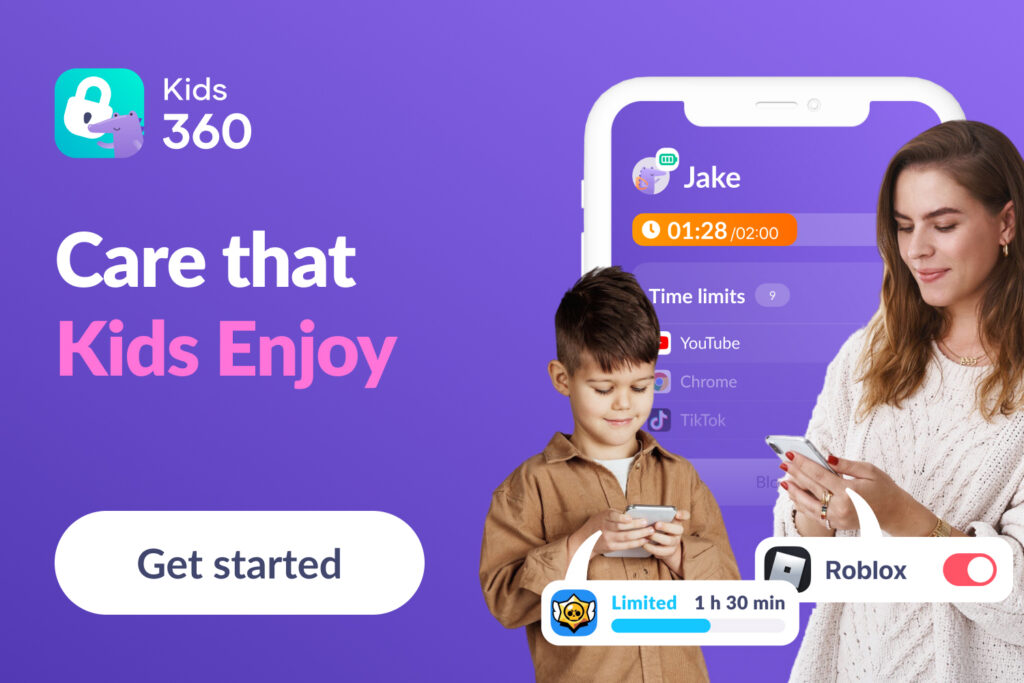
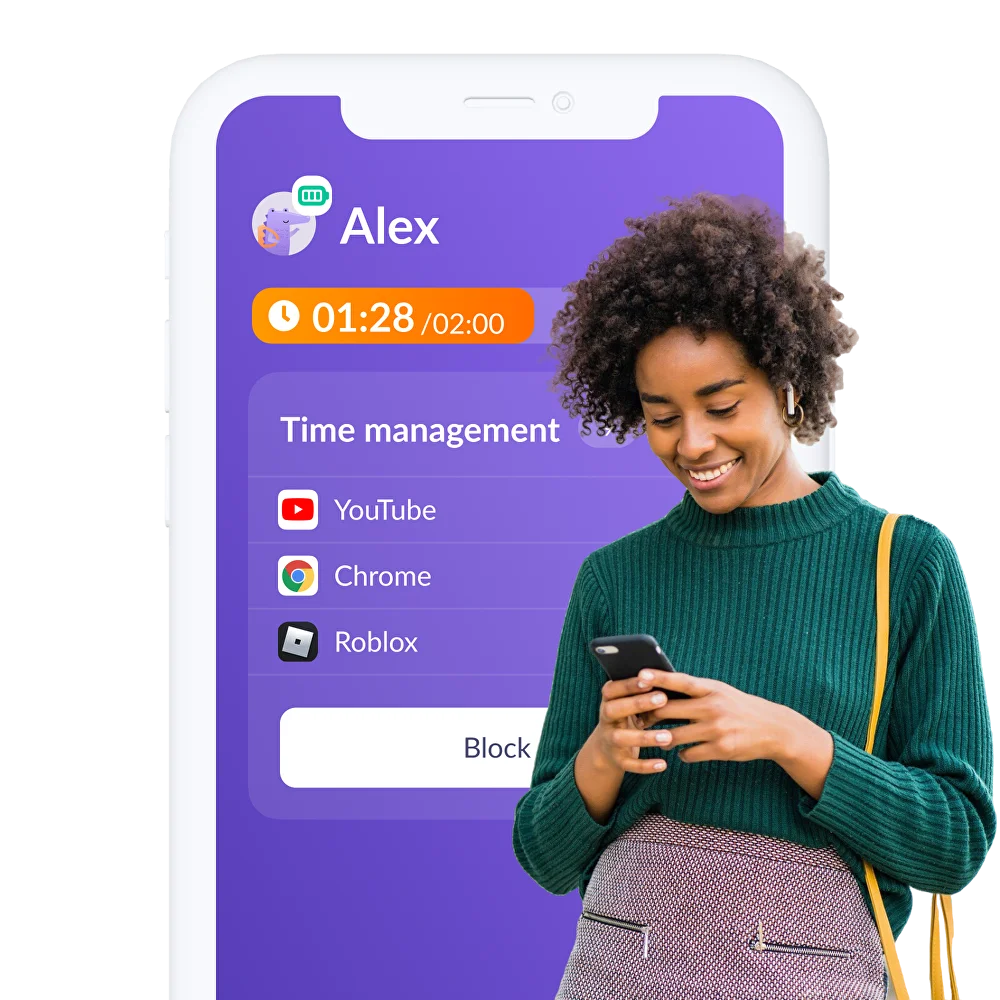
Parents don’t have to wait for government regulations or platform restrictions to create healthier digital habits at home. With Kids360, families can set clear boundaries around screen time based on their child’s age, routine, and individual needs.
Unlike simple device restrictions, Kids360 gives parents a clearer picture of how children use their phones. The app shows how much time kids spend on their devices, which apps they use most, and how their digital habits change over time. This helps parents replace guesswork and daily arguments with clear rules that everyone understands.
With Kids360, parents can:
- Set daily screen time limits: Create healthy boundaries for overall phone use and prevent endless scrolling or excessive gaming.
- Schedule device-free periods: Automatically restrict entertainment apps during school hours, homework time, family meals, or bedtime while keeping essential functions available.
- Block apps instantly: Pause access to distracting apps whenever needed, such as during study sessions or family activities.
- Manage individual apps: Set limits for specific games, social media platforms, or entertainment apps to understand where screen time is really going.
- Check browsing and YouTube activity: Review browser search history and YouTube viewing history to better understand what content children are exploring online and identify potential safety concerns early.
- Encourage balanced habits with Tasks: Let children earn extra screen time by completing useful tasks, turning restrictions into a positive family agreement instead of a punishment.
- Protect settings from being removed: Keep parental controls active with protection against unauthorized app deletion.
- Stay connected beyond screen time: Use location and Loud Signal features to stay aware of where children are while they are away from home.
By integrating Kids360 into everyday routines, families can move away from constant negotiations about “just five more minutes” and create a predictable system that supports both independence and healthy technology habits.
Ready to create healthier screen time habits for your family? Try Kids360 for free today and start managing your child’s digital routine in just a few minutes!
2. Establish a Formal Family Media Agreement
Open communication is the cornerstone of digital safety. Parents should sit down with their children to draft a clear family media agreement. This document should outline the rules of the house, including which platforms are permitted, daily time allowances, and explicit consequences for breaking the agreement.
Writing these expectations down eliminates ambiguity and gives young people a clear understanding of their digital boundaries.
3. Maximize Built-In Privacy Settings
If children utilize permitted online services or gaming sites, parents must actively configure the highest privacy settings available. Ensure profiles are set to strictly private, disable location tracking, block direct messaging from unknown users, and turn off automated recommendations. Taking these manual steps significantly lowers the risk of children encountering harmful content.
4. Foster Proactive Communication and Digital Literacy
Children must be taught exactly what to do when something feels wrong in the digital space. Encourage an open-door policy where your child feels safe reporting cyberbullying, inappropriate messages, or disturbing content without fear of having their device confiscated. Teach them how to use reporting and blocking tools natively built into digital platforms.
5. Talk About Online Friendships and Stranger Risks
Children should know that people online may not always be who they claim to be. Explain why they should avoid sharing personal information, meeting online contacts in real life without adult supervision, or moving private conversations to unfamiliar platforms.
6. Teach Children How Algorithms Shape Their Online Experience
Children should understand that social media feeds are not neutral. Algorithms are designed to keep users engaged by recommending more of what they watch, like, and interact with. Explain how endless scrolling works and encourage children to question what they see online instead of accepting every recommendation as trustworthy.
It is also important to help children understand that social media rarely shows the full reality. Many images are carefully selected, edited, filtered, or enhanced, creating unrealistic expectations about appearance, lifestyle, and success. Encourage kids to think critically about the content they consume and remind them that online posts represent only a small, often idealized part of someone’s life—not a standard they need to measure themselves against.
Beyond Legislation: Navigating the New Digital Normal for Families
The acceleration of the global social media ban movement clearly indicates that the unregulated era of the internet is drawing to a close. While these sweeping laws in the UK, Australia, and beyond provide a helpful regulatory safety net, they are not a silver bullet. No piece of legislation can replace active parenting and intentional guidance.
By pairing government protections with robust in-home tools like Kids360, families can confidently navigate the digital world, ensuring that young people reap the benefits of technology while remaining safely insulated from its distinct dangers.
Sources & References
- Four in five under-16s in Australia using social media despite ban, study shows, The Guardian, 2026
- New YouGov research shows cautious optimism as Australians assess impact of under-16 social media ban, YouGov, 2026
- Online Safety Amendment (Social Media Minimum Age) Act 2024, Wikipedia, 2024
- The Online Safety Act received Royal Assent on 26 October 2023, UK Government, 2025
- Online safety, Ofcom
- Social media reforms to protect our kids online pass Parliament, Prime Minister of Australia, 2024
- Review: Social networking sites and associations with depressive and anxiety symptoms in children and adolescents — a systematic review, PubMed, 2020
- Social Media and Children 2023 Legislation, NCSL, 2023
- National Press and Publication Administration's Notice of Further Strict Management to Effectively Prevent Minors from Addiction to Online Games, China Law Translate, 2021
- Protecting children online. Selected EU, national and regional laws and initiatives, European Parliament, 2025
- South Korea Debates SNS Ban for Minors Amid Global Regulations, The Chosun Daily, 2026
- Vast majority support clampdown on social media to protect children, IPPR finds, IPPR (Institute for Public Policy Research), 2026