How to Reduce Screen Time for Kids Without Daily Battles

Phones and apps can feel like a constant hum in the background of family life. For parents of kids aged 9–14, managing electronic devices has hit a breaking point. Simple rules like “get off your phone” rarely work anymore, because apps and social media are engineered to keep children glued to their screens. Learning how to reduce screen time takes more than willpower; it requires a mix of smart habits and technical structure.
This guide covers practical tips and real-world control methods to build healthier digital habits. By combining firm time limits with a supportive home environment, managing screen time with meaningful, real-world moments is possible.
Key Takeaways
- When excessive screen time becomes the new normal, it often disrupts a child’s mental health and overall well-being, making it clear that something needs to shift for their mental health and their physical health to improve.
- Just telling kids to put their phones away does not work anymore because distracting apps are designed to trigger dopamine hits that are incredibly tough for young brains to resist.
- Using parental controls or app blockers provides the real-world boundary needed to set screen time limits while still teaching kids how to be responsible digital citizens.
- Reducing screen time works best when you pair technical boundaries with fun screen-free activities that get the kids moving and help the whole family reconnect.
Contents:
How Much Is “Too Much” Screen Time for Kids?
Determining a healthy baseline for screen use can be difficult. While experts often suggest two hours of recreational screen engagement daily for older children, the reality often looks quite different. Research indicates that many children spend significantly more hours tethered to their devices.
When screen time consistently exceeds recommended limits, it can increase stress levels and reduce physical activity. Monitoring these statistics is the first step toward understanding whether a child is drifting into unhealthy territory.
The table below breaks down the general expert consensus regarding age-appropriate usage versus typical reality:
| Age Group | Recommended Daily Limit | Average Reality | Key Concern |
|---|---|---|---|
| 5–7 Years | Less than 2 hours | Often exceeds 2–3 hours | Sleep disruption |
| 8–10 Years | Roughly 2 hours | 3–4 hours | Sedentary behavior |
| 11–14 Years | 2 hours (recreational) | 6–9 hours | Mental health/Social stress |
Monitoring these trends helps parents establish where “normal” ends and “excessive” begins. For further insights on developmental milestones and media, the American Academy of Pediatrics (AAP) offers comprehensive guidance on managing these thresholds. By comparing these data points to your own household’s logs, you can begin to see where adjustments are needed to protect your child’s well-being.
What Actually Happens When Screen Time Is Too High
When a child’s digital habits consistently exceed healthy limits, it creates measurable shifts in their development. Research consistently highlights the following links between excessive screen use and emotional or physical health:
| Health Indicator | Research Insight |
|---|---|
| Anxiety | Higher correlation with frequent social media use |
| Emotional Regulation | Kids may become more irritable or reactive when screen time is taken away |
| Self-Esteem | Often impacted by the comparison culture found on apps |
| Sleep | Screen use is associated with trouble falling asleep and shorter sleep duration |
| Physical Activity | More screen time is often connected with less movement and more sitting |
| Attention & Focus | Heavy screen use may make it harder to concentrate for long periods |
Anxiety and Social Comparison
Higher anxiety levels are often tied to what psychologists call the “social comparison trap.” Studies show that frequent social media use can increase feelings of anxiety and depression, especially when children feel pressure to stay constantly connected and compare themselves to others. This fear of missing out (FOMO) keeps the brain in a heightened state of alert, making it harder to relax offline.
Emotional Regulation and the “Revving Engine”
Fast-paced apps and instant rewards can keep the brain in a constant state of stimulation—like an engine that never slows down. According to pediatric research, children who are used to this level of stimulation may struggle with emotional regulation, showing irritability or frustration when screens are taken away.
Self-Esteem and Digital Comparison
Social media often exposes children to highly curated versions of other people’s lives. Research indicates that this constant comparison can negatively affect self-esteem, especially in adolescents, who are still forming their sense of identity.
Sleep, Focus, and Physical Health
Beyond emotional well-being, excessive screen time can also affect sleep quality, attention, and physical activity. Studies have linked screen use—especially before bedtime—to poorer sleep, while high overall screen time is associated with reduced physical movement and shorter attention spans.
If you notice that your child’s device usage is linked to significant mood swings, social withdrawal, or neglect of hygiene, it is essential to seek professional advice. While parental tools and boundaries are helpful, sometimes the right step is consulting a pediatrician or child psychologist to rule out deeper issues. You can find guidance on identifying these signs at the American Academy of Child & Adolescent Psychiatry (AACAP).
Why Reducing Screen Time Is So Hard Today
Reducing screen time feels like an uphill battle because modern technology is engineered to exploit human biology rather than support it. Here are the core reasons why this struggle is so difficult for modern families:
- The Dopamine Loop: Modern apps are designed to trigger constant dopamine hits. Every notification or “like” functions as a reward that the brain craves, making non-digital tasks feel unsatisfying by comparison.
- Social Pressure (FOMO): Digital spaces have replaced the “town square.” For children aged 9–14, stepping away from social media apps feels like being excluded from the group, creating a deep-seated fear of missing out.
- Lack of Physical Boundaries: Unlike the “TV time” of previous generations, modern devices are portable and always on. This removes the “digital sunset” and makes it nearly impossible for a child to define when screen use should end.
- Behavioral Engineering: Parents are competing against algorithms developed by top behavioral experts. These tempting apps are intentionally built to be “sticky,” meaning your child’s attention is the product being sold.
- Habit Formation & Loss of Control: Over time, screen use becomes habitual. Children don’t always make a conscious choice to pick up the phone—it happens automatically. This makes reducing screen time feel like breaking a habit, not just changing a routine, and can contribute to patterns of phone addiction.
Reducing screen time isn’t just about willpower or stricter rules. It means helping a child navigate an environment that’s built to keep them engaged—and gradually teaching them how to step away from it.
The Most Effective Way to Limit Screen Time: The Kids360 App
Taking a device away often leads to arguments and resentment towards the individual who took the device. Instead of constant power struggles, Kids360 offers a better way. It turns screen time management into a system based on motivation rather than just restriction. By blending control with care, parents can protect their children while gaining peace of mind.
How to Set Kids360 Up: A Practical Step-by-Step
Setting up the app is simple and takes only a few minutes, making it a great fit for busy parents.
- Step 1. See Your Child’s Real Screen Time First: Install the app and observe how your child actually uses their device. Give it about a week—this helps you set realistic, data-based limits instead of guessing.
- Step 2. Set Limits on Overall Device Usage: Define how much total time your child can spend on their device each day. This creates a clear boundary and helps prevent endless scrolling.
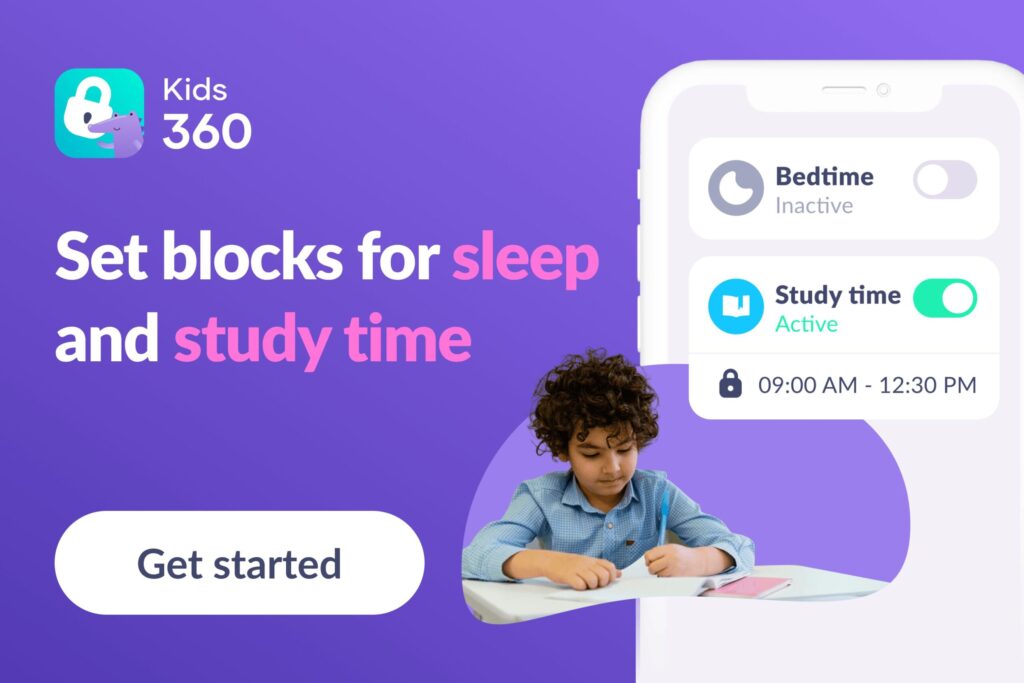
- Step 3. Create a Balanced Schedule: Set screen time limits that account for school time, homework, and bedtime. Blocking distracting and tempting apps during these hours helps your child stay focused.
- Step 4. Block or Limit the Apps That Consume the Most Time: Easily pick out the social media platforms, apps, or games that cause the most friction. You can use app blockers on those while leaving essential communication tools open.
- Step 5. Block Internet Access: If necessary, you can temporarily block internet access to reduce distractions entirely—especially during study time or at night.
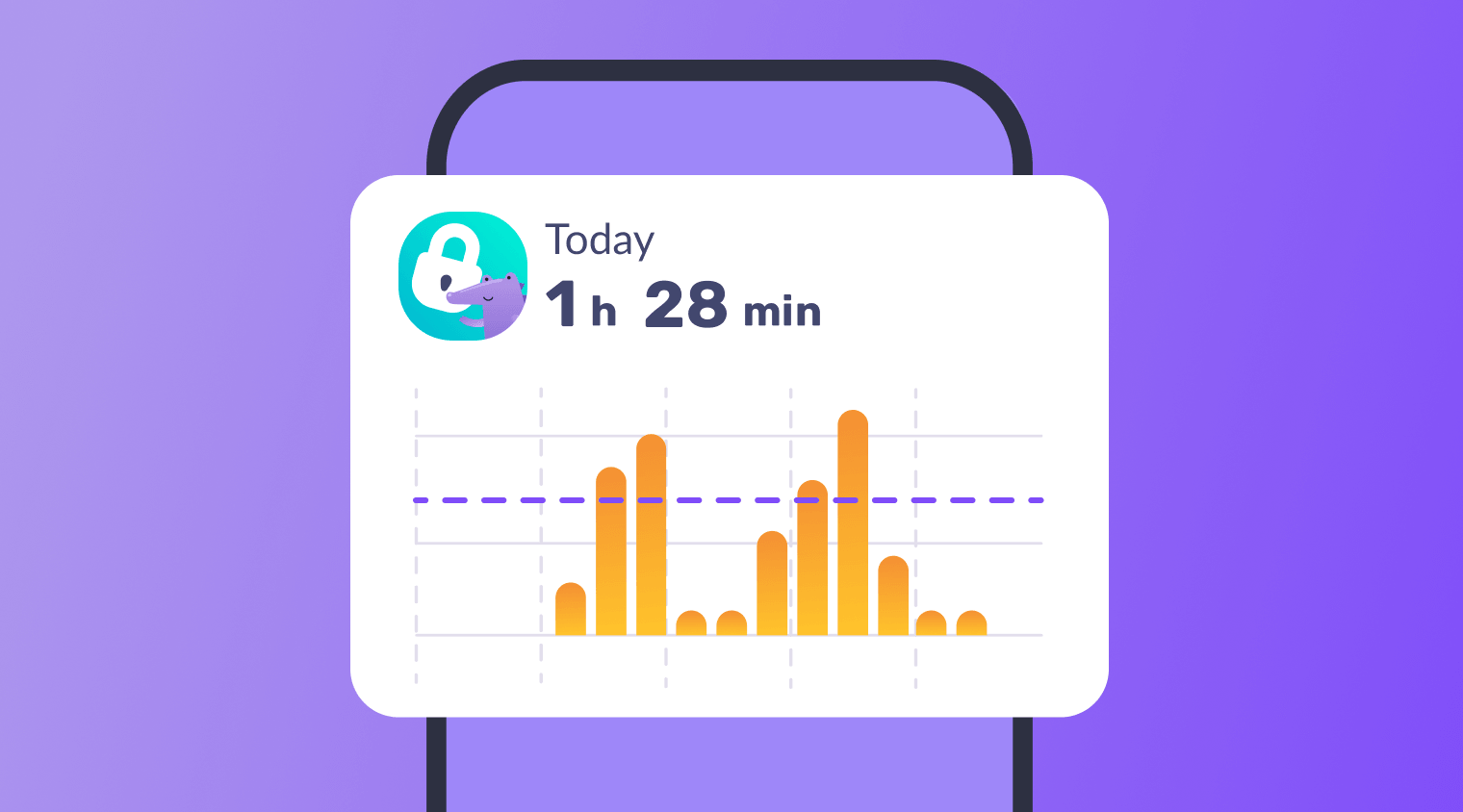
- Step 6. Monitor Usage by Receiving Daily Reports and Take Action if Needed: Check your daily reports to see if your child’s screen use has decreased. This gives you a clear picture without needing to hover over them.
- Step 7. Use Positive Reinforcement: Instead of only limiting, you can motivate. Kids360 allows you to reward helpful behaviors—like reading, physical activity, or chores—with extra screen time. This helps children see device time as something they manage, not just something taken away.
Why Choose Kids360?
Kids360 is more than an app blocker; it acts as a partner in your child’s development. It helps parents offer useful alternatives instead of just saying “no”.
- Tasks and motivation system. Children complete simple tasks and challenges to earn screen time, turning device use into a structured reward system.
- Safety features. GPS tracking, Safe Internet filters, and Loud Signal help parents stay in control both online and offline.
- Easy and simple setup. The app takes just a few minutes to install and configure, making it practical for everyday use.
- Free multi-child and co-parent access. You can connect multiple children and add a second parent at no extra cost, keeping the whole family in sync.
- Real-time insights and reports. Clear daily data shows how the child uses the device, helping parents understand patterns instead of reacting to problems.
This approach helps children build healthier digital habits while giving parents clarity, structure, and fewer daily arguments.
Try Kids360 today and see how simple screen time management can be when it’s built around balance, not conflict!
Practical Tips to Help Kids Unplug
While a tool like Kids360 builds the technical framework, your daily habits provide the foundation. Think of these as the “analog” layer of your strategy, simple changes that help your family stay grounded without needing a battery.
- Create “screen-free” zones. Pick specific spots, like the dinner table or bedrooms, where electronic devices aren’t allowed. This protects your time together during meals and ensures screens don’t get in the way of a healthy sleep routine.
- Stick to predictable routines. Kids usually handle change better when they know what is coming next. By setting a clear, consistent schedule for when they should be offline, you take the guesswork out of the day.
- Replace screen time with real-life alternatives. Instead of focusing only on limiting devices, offer clear substitutes: spending time with friends, going for a walk, listening to music, or doing something creative. Having ready alternatives makes it easier for kids to actually unplug.
- Keep offline fun visible. If books, art, or board games are buried in a closet, they will get ignored. Keep these screen-free activities in plain sight so they naturally become the go-to option for a balanced day.
- Cut the digital noise. We often leave the TV on even when no one is actually paying attention. Turning it off when it is not being actively watched lowers the ambient noise in your home, making the environment much calmer.
- Lead by example. Kids are quick to spot a double standard. If you are constantly glued to your own phone, your children will follow that lead. Modeling the screen-free habits you want them to have is the most powerful example you can set.
Managing the phone zone with your child doesn’t mean you need to go “cold turkey” or eliminate all technology. It is about using a control-based system to ensure that the phone remains a tool for connection rather than a source of stress. By combining practical strategies with the technical support of Kids360, parents can successfully replace or limit screen time with meaningful, real-world experiences.
Sources & References
- Average Amounts of Screen Time Guidelines, AAP, 2026
- Children and Watching TV: Facts for Families, American Academy of Child & Adolescent Psychiatry (AACAP), 2025
- Excessive Screen Time is Associated with Mental Health Problems and ADHD in US Children and Adolescents: Physical Activity and Sleep as Parallel Mediators, Cornell University, 2025
- Media and Children Center of Excellence, AAP, 2021
- Associations between screen time and sleep duration are primarily driven by portable electronic devices: evidence from a population-based study of U.S. children ages 0-17, The National Institutes of Health (NIH), 2019
- Screen-addicted teens are unhappy, San Diego State University, ScienceDaily, 2018
- Associations between screen time and lower psychological well-being among children and adolescents: Evidence from a population-based study, The National Institutes of Health (NIH), 2018