How Kids360 Can Help Kids Focus on Homework



School nights can be chaotic and frustrating for the whole family, especially when kids struggle to finish their assignments. Staying focused is not always a matter of motivation. Noise, phones, notifications, tiredness, an uncomfortable study space, or simply not knowing where to start can all make homework harder.
In this guide, we’ll look at practical ways to help kids focus on homework, from creating a distraction-free study space and managing screen time to breaking assignments into smaller tasks and building regular breaks into the routine.
This article was reviewed and prepared together with Lilla Dale McManis, MEd, PhD, Child Psychologist
Key Takeaways
- There are many potential causes for inattention in kids. Some may simply be environmental distractions, while other issues may be more serious and require additional support from professionals.
- Parents can help kids maintain focus by establishing healthy study routines and predictable schedules.
- There are many strategies to help kids stay motivated. Experimenting with different ones can help to find the best fit for each individual child.
- It is also important for parents to create a quiet study space and minimize distractions such as phones and other devices. Parental control tools, such as the Kids360 app, can help establish these boundaries so that kids can complete homework.
- Teaching kids how to focus on homework can help them develop better concentration skills and achieve academic success in years to come.
Table of Contents
Why Is It So Hard for Kids to Focus on Homework?
Of course, kids’ attention spans are shorter than adults’, but many kids struggle to stay focused beyond what is considered typical for their age. Parents are often left wondering why their children can focus for long periods on preferred activities, such as video games or hobbies, but can’t keep their attention on homework long enough to complete tasks.
Many parents and teachers often first consider Attention Deficit/Hyperactivity Disorder (ADHD) when a student consistently struggles to maintain focus. Though that is one possibility, there are many other potential causes for inattention. And even for those kids who do have ADHD and related disorders, their difficulty focusing may appear inconsistent—they may be hyper-focused on preferred subjects and then can’t stay focused on non-preferred ones.
Many other disorders can affect attention in similar ways. For instance, a child suffering from anxiety may be too preoccupied with worries to maintain focus on schoolwork. The same is true for issues like Obsessive-Compulsive Disorder (OCD), trauma, and other learning differences. It is important for parents to reach out to professionals who can play a crucial role in addressing these issues.
For other kids, their lack of focus may stem from distractions in their environment. For example, if a child is hungry or overstimulated, they may simply be too uncomfortable to stop their mind from wandering. Additionally, if their study environment is too stimulating, kids may struggle to maintain focus on homework. Disturbances from family members, computer screens, or social media notifications could be pulling their attention away from their assignments.
Sleep disturbances can be another big concern, since mental fatigue affects concentration, memory, and emotional regulation. Poor sleep hygiene or nightly screen use can affect sleep quality, making it hard for kids to stay focused the next day.
Why Do Some Kids Struggle to Start Homework Assignments?
For many students, the issue is less about trying to maintain focus and more about getting started on schoolwork in the first place. These kids may struggle with poor executive functioning skills, which are the essential skills we all use every day to self-regulate.
Executive functions are what we all use to plan, organize our thoughts, and transition from one idea to the next. They are also the skills that we use to control our emotions and impulses, set priorities, and make decisions.
For kids who struggle with executive functioning, especially those who have ADHD or similar challenges, it can be a big hurdle just to shift their brain function into homework mode. They may also struggle to shift from one assignment to the next. Additionally, these kids may also be less organized than others, procrastinating on big homework assignments, losing study materials, or cluttering up their study space.
Professional help may be necessary for kids who really struggle with executive functioning issues. Luckily, there are now many effective strategies and study methods to help them develop these organizational skills. These kids can learn how to focus on homework, even when getting started does not come naturally to them.
“Kids can absolutely benefit from executive functioning skills training, but it’s also important to know that these skills keep developing into the mid-20s as the brain fully matures.”
— Dr. Lilla Dale McManis
It may take time for parents to determine the underlying cause of their child’s struggles with schoolwork. However, there are many steps that families can take to prevent distractions, support healthy habits, and make learning at home more peaceful and productive.
How to Improve Focus on Homework
Our modern environment is full of distractions, especially regarding technology. The best strategies for improving attention can vary from student to student, but there are some common steps that everyone can try.
Use Kids360 to Create a Distraction-Free Homework Routine
To make homework time calm and minimize distractions, families need boundaries regarding devices. That is where parental control tools like the Kids360 app can offer invaluable support when teaching kids how to focus on homework assignments.
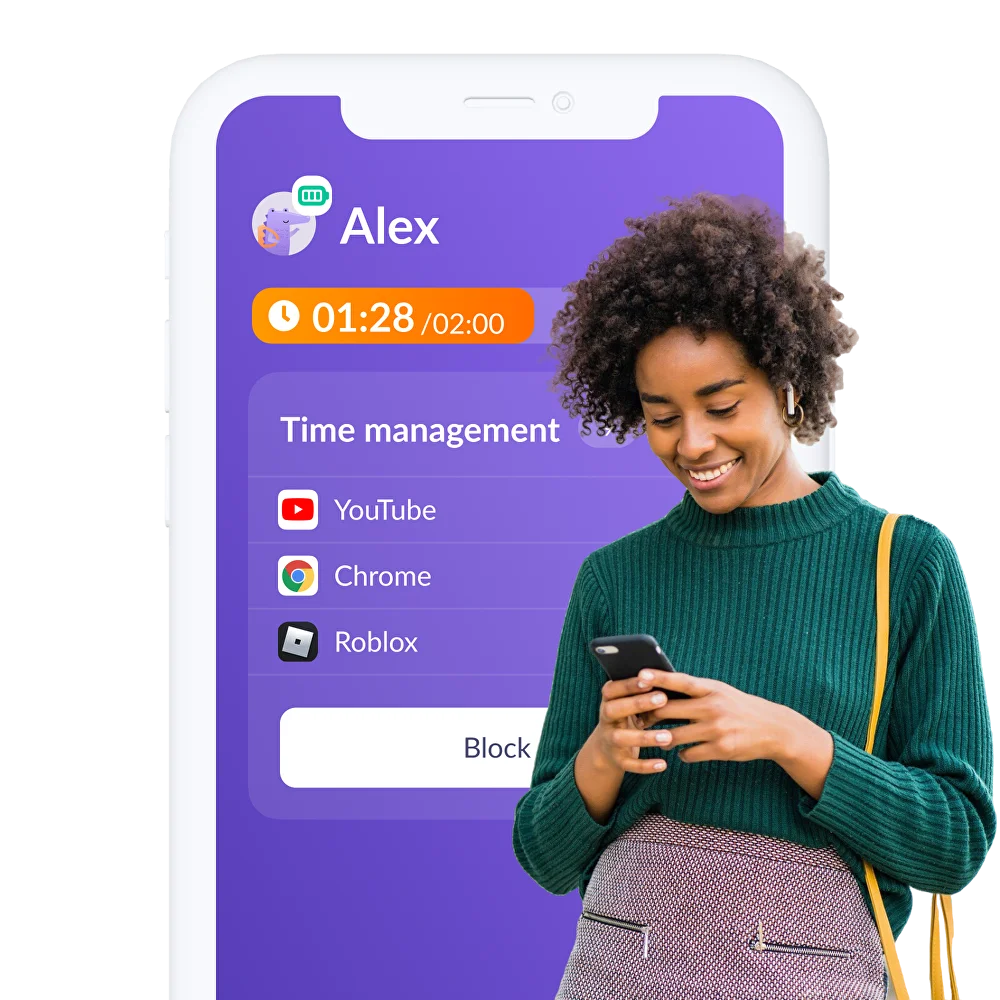
Kids360 is about more than just blocking harmful websites. It is a tool for building routines and setting consistent expectations regarding study time.
Parents can use Kids360 to:
- Set daily screen time limits to help keep device use balanced.
- Set app limits for games, social media, and other distracting apps.
- View app usage statistics to see where a child’s screen time goes.
- Keep essential apps available while restricting distracting ones.
- Use tasks and rewards to encourage children to complete homework and other responsibilities.
Try Kids360 right now for free to help your family build a more focused homework routine!
Create a Dedicated Homework Time
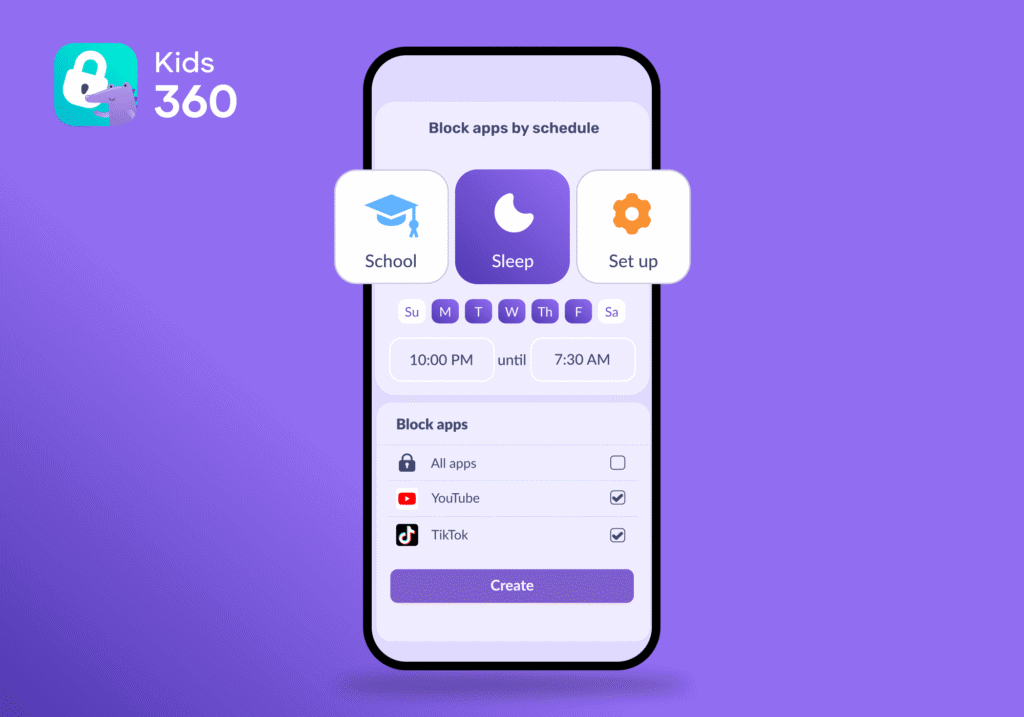
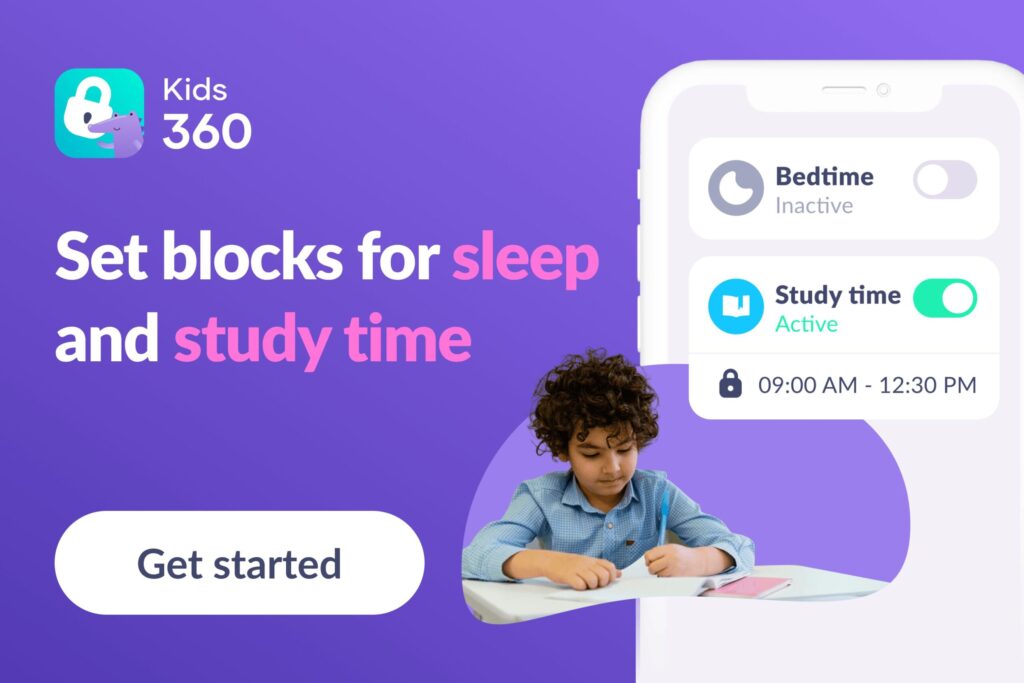
Kids360 also allows parents to create predictable schedules that block games and other distracting websites during homework and school time, as well as during sleeping hours. Families waste precious time and effort trying to manage and negotiate boundaries each day. By setting a regular schedule with Kids360, kids’ study routines become more automatic.
Kids360 is flexible, so different days of the week can have different schedules and app restrictions.
Remove Notifications and Other Distractions
Notifications, messages, and other digital distractions can quickly pull attention away from homework. Turning off nonessential notifications, putting the phone on silent, and keeping distracting devices out of reach can make it easier to stay focused. Kids360 also has a “Block Now” feature that lets parents instantly block distracting apps on a child’s device when it’s time to focus.
Simple physical changes can help too: having a healthy snack nearby or taking a short movement break before studying can improve concentration and make it easier to stay productive.
Make a Homework-Friendly Place
Creating a dedicated, quiet study environment is another important step. Younger students may need to do homework in a communal space where parents can monitor and help them. Older students, on the other hand, may work better in a private area. In either case, it is important that the study space remain free from common distractions.
Keep everything they need within reach, including books, school supplies, water, and a comfortable chair, so they do not have to keep getting up. Good lighting and a clear, uncluttered desk can also make it easier to stay focused.
Break Homework Into Smaller Tasks
Many kids, especially those with executive functioning issues, have a hard time starting new tasks when they are overwhelmed. Big tasks like projects or papers might seem daunting, but breaking them into smaller tasks can translate them into achievable goals.
Try turning a large assignment into a few specific steps, such as choosing a topic, gathering information, making an outline, and completing one section at a time. Checking off each step can make the work feel more manageable and help kids see their progress.
Take Regular Breaks
Regular breaks can help students stay focused and productive during longer homework sessions. Though it might seem counterintuitive, research shows that taking small breaks can help our brains learn new skills and enhance memory.
The best way to spend time during these breaks depends on the student, so some trial and error can help identify their preferred strategy. Some ideas include using breaks to practice mindfulness techniques, getting their blood flowing with physical activity, or eating healthy snacks.
Try the Pomodoro Technique
To schedule these breaks, many people find it helpful to use the Pomodoro Technique, in which they do focused work on one task for 25 minutes and then take a five-minute break. Then, after four 25-minute work sessions, they get a longer break.
However, different time intervals work for individual students and can change with age. Some experimenting can help to find the right balance.
Try a Reward System
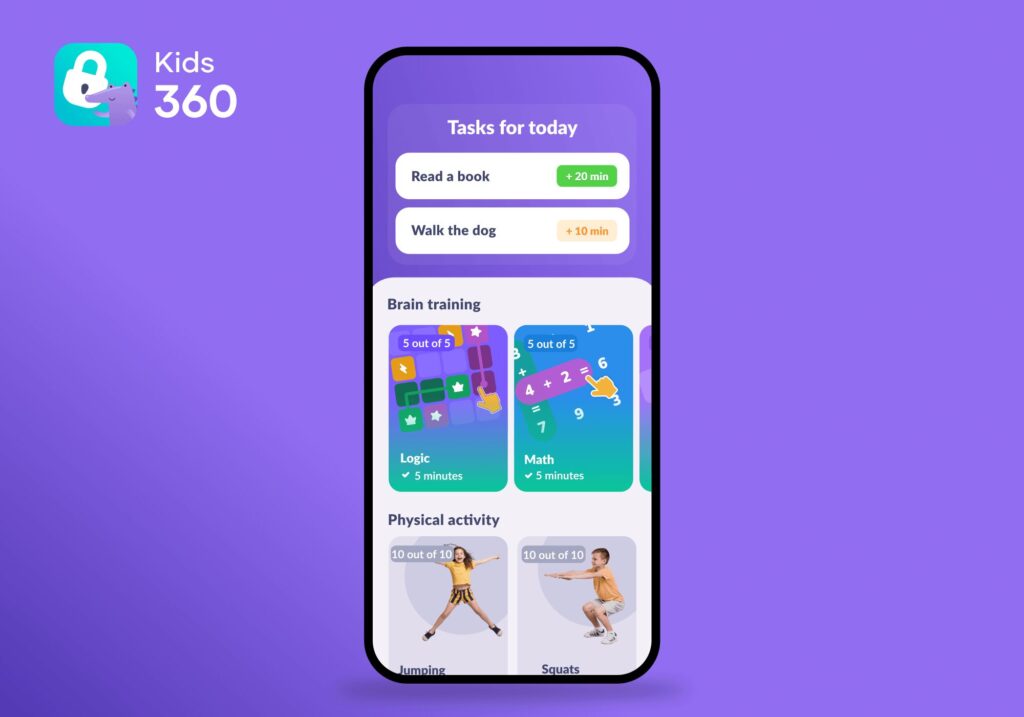
Using reward systems can also help some students stay motivated to complete homework. Getting through a difficult assignment might look more appealing when a favorite activity is waiting for them afterward. For kids who are motivated by screen time, Kids360 can be set to allow them to earn extra time on their devices after they complete homework and other tasks.
Make Sure Your Child Gets Enough Sleep and Rest
Our brains also need the important break that comes with enough good sleep. School-aged kids need 9–12 hours of sleep each day, and teens need 8–10 hours.
High-quality sleep depends on good evening habits, like a regular bedtime and turning off screens at least an hour before that time. Setting up a sleep schedule with Kids360 helps by blocking devices during these important hours, preventing mental fatigue the next day.
Does Music Help Students Focus on Homework?
Many students want to listen to music while studying. But whether it helps them stay engaged really depends on the listener and the type of music they choose. Since different types of music affect the brain differently, it is important to find what works in different situations.
Some students find that having music as background noise helps them stay focused on their tasks. However, others might find it difficult to focus in the presence of any background sound at all, even white noise. Some experimentation can help identify what can improve focus for each individual.
When choosing music for study sessions, it is important not to pick anything too disruptive. That usually rules out music that is too loud or has distracting lyrics. Classical music or other calm, instrumental choices are often the best for maintaining concentration.
“Did you know humans are hardwired to closely attend to language? It’s actually a survival tool—physically, cognitively, and socially. Music with lyrics means that kids cannot help but be distracted. Get your child involved in finding cool instrumental music and they’re more likely to be on board.”
— Dr. Lilla Dale McManis
Listening to music can also be used as a reward when work is complete. Research suggests that music can activate the same reward centers in the brain as many other incentives. So if a student needs some extra motivation, listening to a favorite song might be a nice treat after completing assignments or at the end of study sessions.
What If Your Child Still Can’t Focus on Homework?
If parents have tried a variety of strategies and still find that their child struggles to stay focused on homework, it may be time to seek outside help. As stated earlier, there are a variety of disorders that can make focusing challenging. A proper diagnosis can be critical to understanding a child’s unique learning process and finding the best treatments.
Talking to the child’s teachers and pediatrician can be a great place to start. Academic counselors, tutors, or mental health professionals may also offer additional assistance to help improve concentration. With patience and a dedicated support team, kids have a better chance of developing good study habits and concentration skills.
A Simple Homework Focus Routine
Parents can use the following checklist as a basis for setting up homework routines, adjusting as necessary to fit their kids’ needs and preferences:
- Prepare a dedicated study space. Whether it’s the kitchen table or a personal desk, make sure that the study area is clear of distractions and ready for homework time. Check for adequate lighting and a comfortable temperature.
- Eliminate distractions. It is important that families keep study spaces calm and quiet. Phones and other devices are often the biggest sources of distraction. Using a parental control tool like the Kids360 app can help block this digital noise so kids can stay focused.
- Use timers and focused intervals. A simple approach like the Pomodoro Technique can help students work in focused intervals and take regular breaks.
- Break homework into manageable chunks. Large projects can be overwhelming and make it difficult to start. Breaking them into smaller milestones can feel less daunting.
- Use reward systems. Motivation plays a big role in boosting concentration. Small incentives can help drive students forward.
- Set realistic goals and incorporate breaks. No matter how dedicated a student is, they need to have reasonable expectations and healthy limits.
Learning how to focus on homework takes time, and there is no single strategy that works for every child. A calm study space, predictable routines, regular breaks, enough sleep, and smaller, manageable tasks can all make homework feel easier and help kids stay on track.
Technology can be part of the solution, too. Parents can use tools like Kids360 to set screen time limits, restrict distracting apps, and create a more consistent homework routine without taking the phone away completely.
The goal is not to expect children to concentrate perfectly every time, but to give them the structure and support they need to build better study habits. With the right combination of practical strategies and parental support, kids can gradually become more confident and independent when completing their homework.
Sources & References
- Hyperfocus: The Flip Side of ADHD?, Child Mind Institute, 2025
- Why Can’t My Child Focus in School? What Parents Should Know, Hall Pediatrics, 2026
- Study Shows How Taking Short Breaks May Help Our Brains Learn New Skills, National Institutes of Health, 2021
- Helping Kids Who Struggle with Executive Functions, Child Mind Institute, 2026
- Taking Breaks, University of North Carolina at Chapel Hill, 2026
- Kids and Sleep, Nemours Children’s Health, 2021
- How Music Can Help You Study, University of Maryland Global Campus, 2024
- Musical Reward Prediction Errors Engage the Nucleus Accumbens and Motivate Learning, Proceedings of the National Academy of Sciences, 2019
- How to Focus on Homework, Mental Health Center of San Diego, 2025
- Assessing the efficacy of the Pomodoro technique in enhancing anatomy lesson retention during study sessions: a scoping review, NIH, 2025