Screen-Free Activities for Kids: Real Ideas That Actually Work


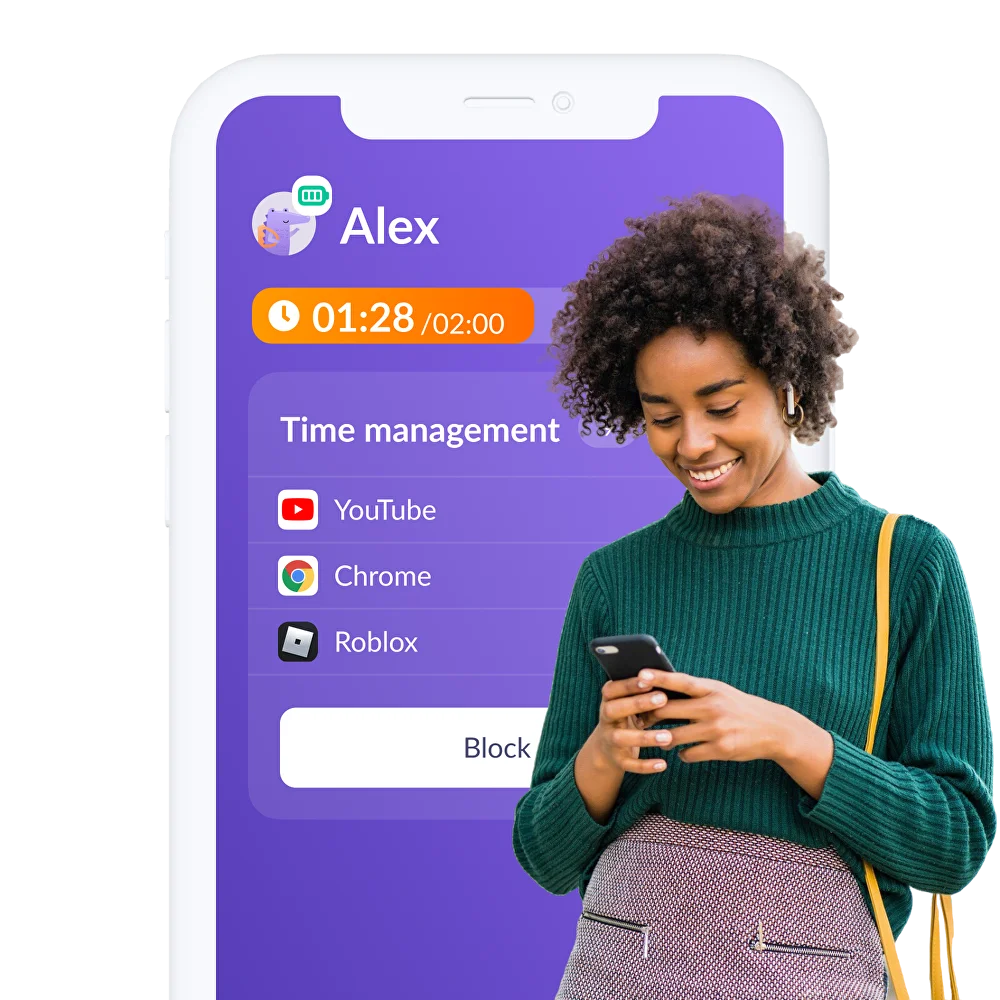
Pulling a child away from a screen can be very difficult and feel extremely overwhelming for parents. Recent data showcases the enormity of this struggle, showing the global average for daily screen time hitting a massive 6 hours and 40 minutes in 2026. For young kids, this means they are spending more than half of their waking hours attached to a device. Finding the right screen-free activities for kids is no longer just about filling a quiet afternoon: it is about reclaiming their attention and protecting a healthy developmental path.
Key Takeaways
- Screen-free activities sharpen a child’s cognitive focus by removing the “switching cost” caused by digital distractions.
- Physical movement, like an obstacle course, provides direct support for brain health and better academic results.
- While many parents find consistency difficult, Kids360 builds a habit-based system that encourages kids to pick real-world play over a screen.
- Creative projects, such as a scavenger hunt or using washable paint, help develop long-term problem-solving skills.
- Hosting a dance party or playing family games builds emotional bonds much more effectively than watching a screen together.
Contents
Why Screen-Free Activities Matter
Moving away from the screen is a biological necessity for a growing child. Research shows that regular screen-free activities deliver massive benefits across every developmental stage.
More Movement and Physical Activity
Cutting back on screen time naturally gets kids moving in their own environment. This physical movement is vital for holistic development, supporting cardiovascular health and a stable weight. Simple exercises, like a family jump session or a set of jumping jacks, improve memory and sharpen executive functions.
More Creativity and Problem-Solving
Passive digital stimulation often turns off the brain: without it, young kids have to use their own imagination to stay entertained. Traditional play, like building with cardboard boxes or magna tiles, builds problem-solving skills and critical thinking. These free activities give kids the space to experiment and learn through trial and error.
Better Family Connection
Face-to-face connection with parents and peers helps kids master social essentials like empathy and verbal communication. Planning a scavenger hunt or hosting a dance party strengthens the bond between parents and children. These activities create a supportive emotional environment that a digital device simply cannot replicate.
Healthier Digital Balance
Current statistics show that 80% of adolescents worldwide are physically inactive, and this is driven by sedentary screen time. Creating screen-free zones helps children avoid the “dopamine loops” of infinite scrolling. This shift builds better long-term focus and a much healthier relationship with the digital world.
Why Screen-Free Activities Often Don’t Work

Transitioning a family away from constant digital stimulation is rarely as simple as just “turning off the TV.” Many parents find that even the most well-intentioned screen-free plans collapse within a few days because they lack a sustainable foundation.
High Setup Effort and Parent Burnout
One of the primary reasons these initiatives fail is the high “barrier to entry” for many free activities. If every suggestion requires a muffin tin, washable paint, and an hour of cleanup, the process quickly becomes a chore for a busy mom or dad. When adults are tired or overwhelmed, the ease of a digital screen often wins out over complex projects like building an elaborate fort from cardboard boxes.
The “Entertainment Director” Trap
Many parents fall into the trap of feeling they must act as a constant cruise director for their kids. If the child has not developed the habit of independent play, they will constantly look to the adults to fill every quiet moment. Without a system that encourages a son or daughter to take the lead, parents quickly experience burnout, leading them to return to devices just to get a much-needed break.
Punishment vs. Lifestyle
When screen-free time is only introduced as a response to bad behavior, kids begin to view it as a penalty rather than a positive choice. This creates a “forbidden fruit” effect where the child only wants the screen more. Without a way to make the real world feel rewarding, the transition becomes a battle of wills rather than a healthy developmental shift.
Lack of Consistency and Predictability
Inconsistency is the enemy of habit-building. If screen-free activities only happen sporadically, kids remain in a state of “digital waiting,” constantly asking when they can have their devices back. To truly move beyond the screen, a family needs a way to bridge the gap between digital entertainment and real-world responsibilities, turning the phone into a tool that supports, rather than hinders, their daily growth.
How to Turn Screen-Free Activities Into Daily Tasks with Kids360

Moving from a digital-focused lifestyle to a balanced (no-screen-time-focused) a child, and a parent requires more than just willpower. Kids360 acts as this structural bridge, turning the device from a constant source of conflict into a tool for growth. The app operates on a balanced combination of control and care, allowing parents to support a child’s self-development while maintaining peace of mind.
What is Kids360, and How Can it Help?
Unlike traditional parental control software that only functions as a “stop” button, Kids360 focuses on habit-building. It operates through a three-step process designed to foster digital independence while keeping kids safe online.
- Assess and benchmarking: The app provides deep insights, helping parents see exactly how much screen time their son or daughter is consuming across all the apps on their phones. This data is crucial when compared with healthy norms; for instance, the American Academy of Pediatrics suggests limiting non-educational screen time to roughly 1–2 hours per day for children.
- Strategic reduction: Once a child’s screen time is understood, parents can reduce excessive screen time by setting firm screen time limits and a daily schedule for specific apps or websites. This includes app blocking for certain apps during school hours or bedtime to ensure the child stays focused and rested.
- Active motivation: Most importantly, Kids360 motivates kids to put the screen away and do something useful. It reframes gadget use as a valuable resource that a child takes responsibility for by earning minutes through effort and self-development.
How to Use Tasks for Children in Kids360 to Get Them Away from the Screen
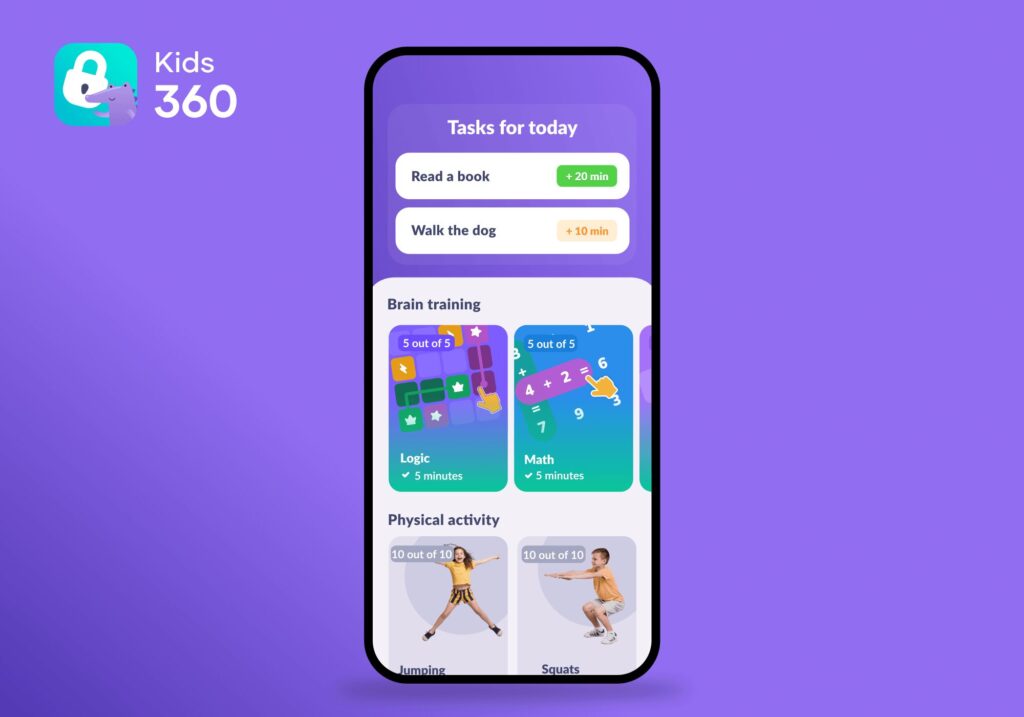
By using the task system, children learn that phone time is a valuable resource earned through effort. Below is a deep dive into how parents can use specific task categories to encourage life beyond the screen.
Creative Tasks from Parents
Parents can move past the technical routine by creating a custom list of creative activities that focus on “analog” fun. These tasks are highly flexible and can be set as one-time goals or recurring daily habits.
- Drawing and art: Assign a task to create a specific piece of art or complete a page in a coloring book.
- Deep reading: Set a goal to read for 20 minutes. This helps build the focus that high-speed digital content often erodes.
- Journaling and writing: Encourage the child to write about their day or a specific topic to improve their verbal expression.
- Puzzles and building: Challenge them to finish a physical puzzle or build a structure using magna tiles or cardboard boxes.
Physical Activities
One of the most innovative Kids360 parental control features is the ability to link kids’ movements in the real world to their flexibility in the “digital world”. This ensures children don’t spend long periods sitting stagnant.
- The AI trainer: This feature uses the phone’s camera to watch and count repetitions of physical exercises in real time. For every 5 repetitions of squats or push-ups, the child earns 10 minutes of screen access.
- The Step Counter: The app synchronizes with the phone’s built-in step counter. If the child hits a goal of 7,000 steps in a day, the bonus is granted automatically.
- Short workouts and stretching: Parents can also create manual tasks for a dance party, stretching sessions, or jumping jacks to keep energy levels balanced.
You can assign a variety of simple, age-appropriate tasks, such as:
- Helping with laundry, like sorting or folding clothes
- Making the bed and tidying up the bedroom
- Feeding the dog or taking care of a pet
- Setting the dinner table before meals
- Cleaning up after eating or putting dishes away
- Keeping shared spaces tidy, like picking up toys or organizing belongings
By utilizing these varied task categories, you ensure a healthy household habit forms: responsibilities always come before entertainment. It is a structured way to turn simple free activities into a path for personal growth.
You can download the Kids360 app for free on Google Play or the App Store to start building this balance in your home today!
Screen-Free Activities That Actually Work
To keep your kids engaged and active, here is an extensive list of ideas tailored for children aged 7–14. At this stage, screen-free activities need to offer a mix of challenge, autonomy, and social connection. Many of these can be integrated directly into the Kids360 task system to turn real-world effort into a rewarding experience.
Quick, No-Prep Activities (Zero Setup)
When you need immediate engagement without a trip to the store, these ideas utilize items already in your home:
- Indoor “laser” maze: Use string or painters’ tape to create a complex web in a hallway. The goal is to get through without touching the “lasers.”
- Reverse Hide and Seek: One person hides, and everyone who finds them must join them in the hiding spot until the last person finds the whole group.
- Kitchen chopped challenge: Give kids three random ingredients from the pantry and challenge them to create a unique (and edible) snack.
- Minute to win it: See how many socks they can pair in 60 seconds or how high they can stack plastic cups.
- Paper airplane long-distance contest: Use scrap paper to design various models and see which aerodynamic design flies the furthest.
- Pillow fortress build: A classic that never gets old, use couch cushions and blankets to create a multi-room “base.”
- The Floor is Lava (advanced): Set up a path across the living room using only specific “safe” objects like books or towels.
- Card deck trick shots: Try to toss playing cards into a laundry basket from across the room.
- Blindfolded taste test: Use common fridge items and have them guess the flavor while blindfolded.
- Shadow puppets or hand theatre: Using just a flashlight and a blank wall, create a short silent story.
Movement-Based Activities (High Energy)
For burning off excess energy and improving problem-solving skills, focus on activities that keep kids moving:
- Indoor obstacle course: Build a course that requires them to jump, crawl, and balance over furniture and tape lines.
- Freeze dance challenge: Use a high-energy playlist; the mom or dad stops the music, and everyone must freeze in a complex pose.
- Home workout circuit: Set up stations for jumping jacks, squats, and mountain climbers. Use the Kids360 AI Trainer to track reps.
- Balloon volleyball: Set up a “net” using a piece of string and keep the balloon from touching the floor using only heads or hands.
- Hallway bowling: Use empty plastic bottles as pins and a soft ball to see who can get a strike.
- Yoga or pilates flow: Follow a 15-minute routine to improve flexibility and focus.
- Sock skating: On a smooth floor, use socks to “skate” and perform spins or races.
- Jump rope marathon: Challenge them to hit a specific number of jumps without stopping to earn extra digital time.
- Stair climbing challenge: A simple way to burn energy, see how many times they can safely navigate the stairs in 5 minutes.
- Animal crawl races: From crab walks to bear crawls, these engage different muscle groups and add a competitive edge.
Creative & Cognitive Activities (Deep Focus)

These ideas encourage children to explore their own imagination and stay entertained without passive stimulation:
- Cardboard engineering: Use large cardboard boxes to build a functional desk, a suit of armor, or a “theatre” for a play.
- Magna tile architecture: Challenge them to build a scale model of a famous landmark using magna tiles.
- Washable paint murals: Lay down a large sheet of paper (or use a dedicated wall space) for a collaborative art project using washable paint.
- Stop-motion animation (Physical): Use clay or LEGOs to storyboard a scene before using a device to “film” the final result as a reward.
- DIY science lab: Use baking soda, vinegar, and a spray bottle to experiment with chemical reactions.
- Origami masterclass: Provide paper and a guide to help them learn the art of complex paper folding.
- Journaling or creative writing: Encourage them to write a short story or start a daily gratitude journal.
- Physical jigsaw puzzles: A 500-piece puzzle is a great way to encourage long-term focus and patience.
- Jewellery making: Use beads or embroidery thread to create friendship bracelets for peers.
- Model building: Whether it’s a car or a plane, these kits require high levels of fine motor skills and concentration.
Social & Family Activities (Connection)
Focus on building family connection and master social essentials like empathy through collaborative play:
- Indoor scavenger hunt: Create a list of 20 obscure items for them to find, like “something older than you” or “a leaf from outside.”
- Weekly board game night: Set aside a night for classic strategy games like Monopoly, Catan, or Chess.
- Connection letters: Have them write a handwritten letter to a grandparent or a friend they haven’t seen in a while.
- DIY fashion show: Raid the closet for a “best-dressed” or “funniest outfit” contest judged by the parents.
- Family “escape room”: Design a series of riddles and locks they must solve to “escape” a room in the house.
- Collaborative cooking: Let them lead the preparation for a family meal, from finding the recipe to setting the table.
- Talent show: Everyone in the family prepares a 2-minute act, whether it’s a song, a joke, or a magic trick.
- Trivia night: Create a “Family History” trivia game to see who knows the most about their relatives.
- Charades or Pictionary: Classic games that require non-verbal communication and quick thinking.
- Tea party or “fancy dinner”: Dress up for a formal meal at home to practice social etiquette and conversation.
Outdoor Activities (Fresh Air)
Getting into the fresh air provides a much-needed break for both parents and kids:
- Local park exploration: Visit a local park to use the equipment or engage in a game of touch rugby or football.
- Sidewalk chalk art: Use the driveway as a canvas to create giant 3D-effect murals or a massive hopscotch board.
- Nature scavenger hunt: Take the hunt to the neighborhood, looking for specific birds, plants, or a neighbor’s dog.
- Backyard campout: Set up a tent or a blanket fort under a tree for an afternoon of reading or cloud watching.
- Neighborhood bike ride: Map out a 5km route through the local area to get the heart rate up.
- Rock painting: Find smooth stones at the park, paint them with bright designs, and hide them for others to find.
- Gardening projects: Let them take responsibility for a small patch of soil or a few potted herbs.
- Basketball shootout: Head to a local hoop for a game of “HORSE” or a free-throw contest.
- Star gazing: Lay out a blanket on a clear night and use a physical star map to identify constellations.
- Frisbee or kite flying: Head to an open field to master the physics of flight.
Matching Screen-Free Activities to Mood and Energy Levels

To keep kids happy, it is essential to match the activity to their current biological state. An overstimulated child will struggle with a complex scavenger hunt, while a high-energy son or daughter will find it impossible to sit quietly.
| Mood or Energy Level | Activity Idea | Key Tools & Materials | Kids360 Task Category |
|---|---|---|---|
| High Energy | Indoor obstacle course | Couch cushions, painters’ tape | Physical activity |
| Overstimulated | Creative writing/reading | Journal, books | Creative tasks |
| Social Connection | Dance party or charades | Music, family | Physical activity |
| Independent Focus | Cardboard world | Cardboard boxes, washable paint | Creative tasks |
| Mental Fatigue | Daily brain workout | Kids360 library (4,400+ tasks) | Cognitive development |
| Restless | Neighborhood hunt | Local park, dog | Responsibility tasks |
Strategic Ideas Based on Developmental Stages
Every child has different needs based on their level of maturity and independence. To make screen-free time stick, the activity must provide a “just right” level of challenge that builds problem-solving skills without causing frustration.
For School-Aged Children (Ages 7–10)
This is the “sweet spot” for high-energy, competitive free activities. Children in this age bracket thrive when they can create something tangible or master a physical skill.
- Engineering challenges: Instead of simple blocks, encourage them to build elaborate structures using magna tiles or multi-room forts from cardboard boxes.
- Complex quests: Set up a detailed scavenger hunt that requires them to solve riddles or complete mini-tasks before finding the next clue.
- Skill mastery: Use washable paint for more detailed art projects or introduce basic kitchen skills like making a sandwich or a smoothie to build confidence.
For Tweens (Ages 11–12)
At this stage, kids are looking for more autonomy and social engagement. Activities should focus on hobbies that feel “grown-up” and allow for personal expression.
- Physical competition: Move beyond basic play to structured movement. A backyard obstacle course with timed laps or a dance party where they choreograph their own routine provides the high-intensity jump in heart rate they need.
- Strategy and logic: Introduce complex board games or long-form puzzles that require several sittings to complete, fostering patience and long-term focus.
- Outdoor independence: Encourage them to take the dog for a walk or meet a friend at the local park, giving them a sense of freedom away from the screen.
For Teens (Ages 13–15)
Teens need activities that offer digital independence and a clear link between effort and reward. This is where the “incentive paradox” works best, using their desire for digital access to fuel real-world habits.
- Social connection: Encourage real-world social “hangouts” that don’t involve a headset. Whether it’s a DIY fashion show with friends or a neighborhood bike ride, the focus is on face-to-face master social essentials.
- Creative output: Many teens enjoy using their creative energy for music, journaling, or complex DIY projects like room redecoration or “upcycling” old clothes.
- Self-development: They can use the Kids360 AI Trainer to master specific fitness goals, like a certain number of jumping jacks or push-ups, to earn their evening digital time. This teaches them that their phone is a resource to be managed, not a baseline for their entire day.
Common Mistakes to Avoid on the Path to a Screen-Free Home
Even with the best intentions, parents often run into hurdles that cause their new screen-free systems to collapse. Avoiding these common pitfalls is essential to keeping kids happy and ensuring that screen-free activities become a permanent part of the family week.
Trying to Remove All Screens at Once
Going “cold turkey” (removing screen access overnight) will lead to a significant break in trust and overwhelming resistance from the child. It is much more effective to use parental controls to gradually implement time limits and screen-free times. This slow transition allows the child to adjust their energy and expectations without feeling like their digital world has been unfairly taken away.
Offering Only Complicated Activities
Many parents believe they must create elaborate, Pinterest-worthy projects to keep their kids engaged. However, if every activity requires a muffin tin, washable paint, and an hour of setup, the process becomes unsustainable for a busy mom or dad, and can feel increasingly overwhelming and daunting. Screen-free activities should include simple options like playing with cardboard boxes or toys to ensure the system does not rely on constant, high-effort preparation.
Expecting Parents to Entertain All Day
One of the fastest ways to parents’ burnout is the belief that they must act as a constant cruise director. It is vital to encourage independent play where the kid takes the lead. Providing basic tools like painters’ tape, magna tiles, or even a spray bottle with water allows children to explore their own creativity while the adults take a much-needed break.
Using Screen-Free Time as Punishment
If screen-free activities are only introduced after a child has misbehaved, they will quickly begin to view them as a penalty. To foster positive digital habits, the shift toward being screen-free should be framed as a rewarding, healthy lifestyle choice. Using the Kids360 task system helps here by making the process more objective: the child knows they are working toward a goal rather than being punished.
Forgetting Age and Energy Level
A common mistake parents make is forcing a high-energy child to sit and write when he needs to jump, or asking toddlers to perform tasks beyond their developmental ages. Successful screen-free time requires matching the child’s activity level to the child’s state. For example, use a dance party or an obstacle course for high-energy moments, and save creative projects like scavenger hunt planning for when they are more focused.
How to Make Screen-Free Activities Stick
Shifting a family toward a screen-free lifestyle should be focused on long-term habit building and sustainability. To ensure kids remain engaged with screen-free activities in the long haul, parents must create a reliable environment where real-world play feels like a natural part of the week.
Same Time Every Day
Consistency is the most powerful tool for reducing digital friction. By establishing a routine where screen-free time happens at the same time every day, the child begins to build an internal clock for other fun activities. Whether it is an hour after a local park visit or immediately following dinner, a predictable schedule helps the energy of the house stay balanced.
Establish Clear Limits
Ambiguity leads to arguments. To keep kids happy, parents must set firm, understandable time limits and boundaries for both the reduction in screen time and the new transition to screen-free activities. Using the Kids360 app allows adults to set these boundaries digitally, ensuring the device locks automatically when the limit is reached, which removes the need for constant verbal reminders (or frustration for parents).
Provide Visible Alternatives
If a child has to ask or look for art supplies, they are more likely to revert to the ease of a screen. To encourage creative exploration, keep tools like painters’ tape, cardboard boxes, and magna tiles in plain sight. Creating a dedicated “activity station” with a muffin tin, dry rice, and washable paint makes it easier for the kid to take the initiative to start playing without asking their mom for help.
Eliminate Negotiation Every Time
Constant bargaining over “just five more minutes” is exhausting for any family. By moving toward a reward-based system, you eliminate the overwhelming negotiation cycle. When kids understand that their screen time is a direct result of completing a specific activity, like a dance party, a scavenger hunt, or helping with the laundry, the “bad guy” dynamic in the house disappears.
Leverage the Kids360 System
The most effective way to make these habits stick is to use Kids360 as your go-to app for screen-time monitoring, and it manages the technical routine of tracking parental tasks and calculating screen time so you can focus on being a parent. By turning gadget use into a learning game, you are helping your son or daughter develop the discipline they need for the real world.
Sources & References
- The Benefits of a Screen-Free Childhood, Nurture and Nature Montessori, 2025
- The Benefits of a Screen-Free Childhood for Healthy Development, The Child Unplugged, 2025
- World Health Organization: Physical Activity Fact Sheet, World Health Organization, 2024
- Health Benefits of Physical Activity for Children, Centers for Disease Control and Prevention (CDC), 2025
- Comprehensive School Physical Activity Programs: Benefits, Centers for Disease Control and Prevention (CDC), 2023
- The Effects of Screen Time on Early Childhood Development: A Systematic Literature Review, ResearchGate, 2025
- Screen Time and Early Childhood Social–Emotional Development Among Children Aged Five to Six Years, ResearchGate, 2025