What Age Should a Kid Get a Phone? Essential Insights for Parents


Deciding exactly what age a kid should get a phone is one of the biggest worries for modern parents. It is no longer just about providing a way to contact family after school; it is about handing over a portal to the entire internet. A research report from the ACMA indicates that by age 10, nearly 42% of kids already have their own phone, and that number surges to 71% by age 12. While other parents might push for an early first phone, the decision involves many factors that go far beyond a simple number on a birth certificate.
Finding the right age for a child’s phone requires a careful assessment of a child’s maturity and the family’s specific needs. For some, a cell phone is a tool for communication and safety. For others, it represents a risk to mental health and focus. This guide explores the research, expert expectations, and practical rules to help you determine whether your child is ready for their own phone.
Key Takeaways
- There is no universal right age; most parents find the range between 10 and 14 to be a common starting point for a first phone.
- A child’s maturity and ability to follow clear rules are better indicators of readiness than chronological age.
- Starting with a basic phone or a smartwatch can help younger kids build responsibility before moving to their first smartphone. This is also a stage where parental control apps like Kids360 serve as a simple way to set initial restrictions while the child learns basic responsibility.
- Implementing parental controls and screen time limits via parental control apps like Kids360 provides a safety net while teaching more independence.
- Establishing ground rules and phone-free zones early helps prevent negative effects on sleep and social pressures.
Contents:
Why There Is No Single Perfect Age for a First Phone
If you talk to other kids’ parents, you will quickly find that every family has a different answer. While 10 is often cited as the global average age for a first smartphone, expert opinions on the right age vary significantly based on developmental priorities:
- The “Wait Until 8th” Perspective: This movement encourages parents to delay smartphones until the end of eighth grade (roughly age 14). Supporters argue this protects mental health and reduces social pressures during the most vulnerable middle school years. According to the movement’s own FAQs, the average age children receive their first smartphone is 10, and many parents pledge to delay this to give kids more time free from distractions and risks
- The Clinical Approach: Many psychologists stress that a child’s maturity and real-life needs matter more than a fixed age. If a child walks to school alone or spends time outside the home unsupervised, having a phone can be a safety necessity, even at a younger age.
- Developmental Research and Academic Findings: A longitudinal study found that receiving a first smartphone at age 10–11 did not generally affect language development. However, children who were already heavy users of screen media and got a phone early showed slightly poorer language outcomes. This suggests that the age itself is less important than how much and in what way the phone is used.
- Digital Literacy and Guided Introduction: Other experts highlight that children can be introduced to smartphones in a controlled, limited way, even at a younger age, not as full, unrestricted devices, but as tools for learning, communication, and supervised exploration. This strategy helps kids learn responsible tech use, set digital boundaries, develop digital literacy, and understand how apps work, all under parental guidance.
Average Ages and Trends: The Global Reality
While expert guidelines often lean toward caution, global research shows that most parents are introducing devices much earlier due to the practicalities of modern life.
| Country / Region | Average / Typical Age of First Smartphone | Ownership Statistic (approx.) | Source |
|---|---|---|---|
| United States | ~10.9 years | By age 8, ~23% of children own a cellphone (majority are smartphones); over half own their own smartphone by ages 11–12 | Forbes |
| United Kingdom | ~9–10 years | Ownership rises sharply from ~25% at age 9 → ~46% at age 10 | Ofcom Children’s Media Use Report |
| Latin America (sampled in NIH study) | ~11.8 years | The first smartphone is acquired at an average age of ~11.82 years (range: ~7.7–15.25 years) | NIH longitudinal study |
| European OECD (general) | ~10–12 years | In several European countries, more than 90% of 10-year-olds already own a smartphone in some regions | OECD “How’s Life for Children in the Digital Age” |
| Japan | <10 years (trend) | Many 5th–6th graders own a smartphone; the average age is decreasing | Japanese survey / secondary source |
In the U.S., nearly one in four children has their own cell phone by the age of eight. This trend suggests that other parents are often motivated by the need to stay in contact during school hours or extracurricular activities, even if they harbor safety concerns about social media usage.
Factors to Consider: Is My Child Ready or Not?

Before you get a phone for your kid, you must evaluate their ability to handle responsibility. A smartphone is an expensive piece of technology that requires a little more freedom, but it also requires a child who does not frequently lose things.
Maturity checklist for parents:
- Responsibility with belongings: Does the child take care of their school supplies, or do they constantly lose things like jackets and lunchboxes?
- Following household rules: Can the child follow existing screen time limits on a shared family device without a discussion or argument?
- Social maturity: Is the child ready to handle peer pressure and the social pressures that come with text messages and social media apps?
- Safety awareness: Does the child understand the dangers of the internet, such as talking to strangers or sharing private information?
- Impulse control and patience: Can your child resist the urge to check apps constantly, or are they likely to overuse the phone immediately after receiving it?
- Emotional readiness: Can your child cope with negative messages, online teasing, or accidental exposure to content that may upset them?
- Understanding privacy: Does your child know that what they post online can last forever and may be seen by more people than intended?
Remember, a smartphone is a tool for communication and learning, but it also brings new responsibilities. The key is to assess individual readiness, not simply follow averages or trends.
Pros and Cons of Giving a Child a Cell Phone
The decision to give a kid a phone is a balancing act between safety and risk. Most parents want the peace of mind that comes with being able to reach their child, but they worry about the child being constantly glued to the screen.
| Benefits | Risks |
|---|---|
| Emergency communication and GPS tracking | Potential for social media cyberbullying |
| Building responsibility and digital literacy | Exposure to inappropriate internet content |
| Staying in contact with friends and family | Negative effects on sleep and physical activity |
| Facilitating school projects and group chats | Risk of unlimited access leading to phone addiction |
| Learning time management and self-regulation | Risk of oversharing personal information |
| Early familiarity with digital tools for future education | Overexposure to advertising and in-app purchases |
Giving a child a phone is not just a yes-or-no decision—it’s about finding the right balance between connectivity and protection.
Age Guidelines and Practical Recommendations
While every child is different, certain age ranges offer a general framework for parents to follow.
Under 7–9: The Shared Device Phase
For younger kids, a personal mobile phone is rarely necessary. At this age, a tablet or a shared family device is better for helping them play games or watch videos under direct supervision. Kids younger than 10 are often not yet equipped to handle the responsibility of their own phone.
10–12: The Basic Mobile Phone or Smartwatch
This is a popular age for a first phone, especially as kids enter middle school. Instead of a smartphone, consider a basic phone or a gabb phone that allows for texting and calling without social media. This allows for communication while minimizing safety concerns. This is also a stage where parental control apps like Kids360 serve as a simple way to set initial restrictions while the child learns basic responsibility.
12–14: The First Smartphone
By eighth grade, the peer pressure to have a smartphone increases significantly. If the child has shown they are responsible, this is a common age for a first smartphone. However, it should only be given with clear rules and parental controls in place.
Safety Measures: Using Kids360 as a Supportive Tool
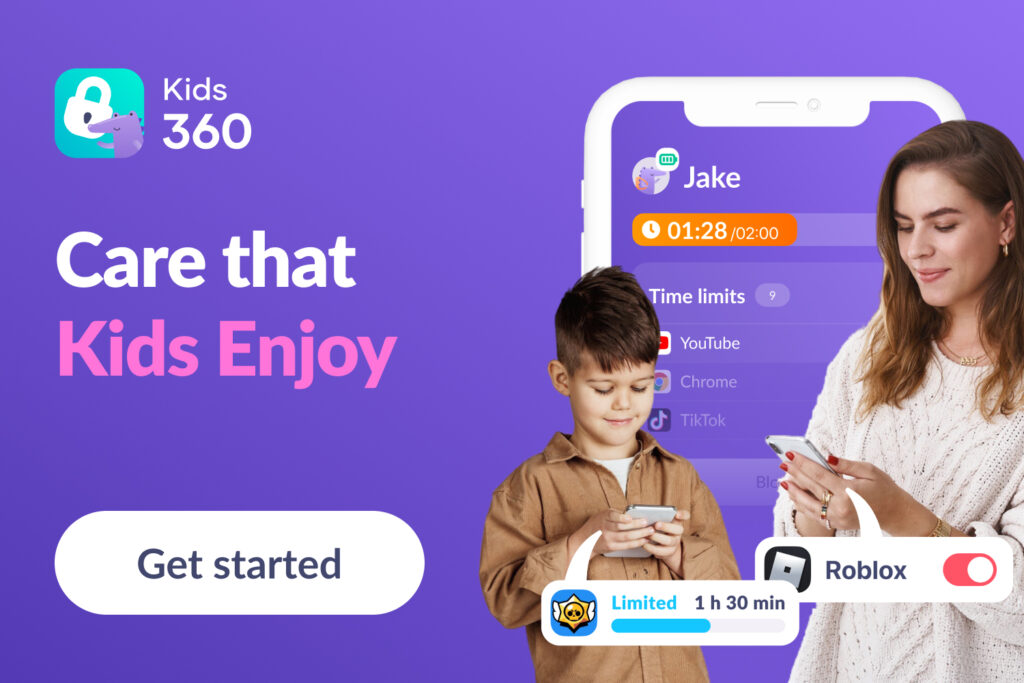
Handing over a first smartphone should feel like a guided milestone rather than a sudden leap into the unknown. Once the child receives their own phone, the focus shifts from the “when” to the “how” of maintaining safe boundaries. Successful parents often use this transition to teach more independence through a combination of clear rules and digital support tools.
Parental control apps like Kids360 act as a digital co-pilot during this phase, offering a balanced mix of safety and support to help your child grow. Instead of mere surveillance, this tool focuses on teaching teens and younger kids how to handle phone usage responsibly in the long term.
Establishing Visibility and Healthy Limits
A major part of setting up a first phone is understanding how your child engages with the internet. Through the parental dashboard, you can gain app usage visibility to see which social media apps and games are being used most. This functionality allows parents to notice relevant interests or exposures to risky topics early and talk to their child.
- Monitor Safely: Enable Safe Internet features to view browser history and YouTube views.
- Stay Alert: The system provides alerts for unusual behavior, sending notifications about risky or unusual app activity to give parents extra peace of mind.
- Define Boundaries: Use the app to limit screen time by setting a general phone time limit.
- Create Schedules: Set daily schedules to block games or apps during school hours, study sessions, or bedtime to protect your child’s sleep and focus.
Turning Responsibility into a Learning Game
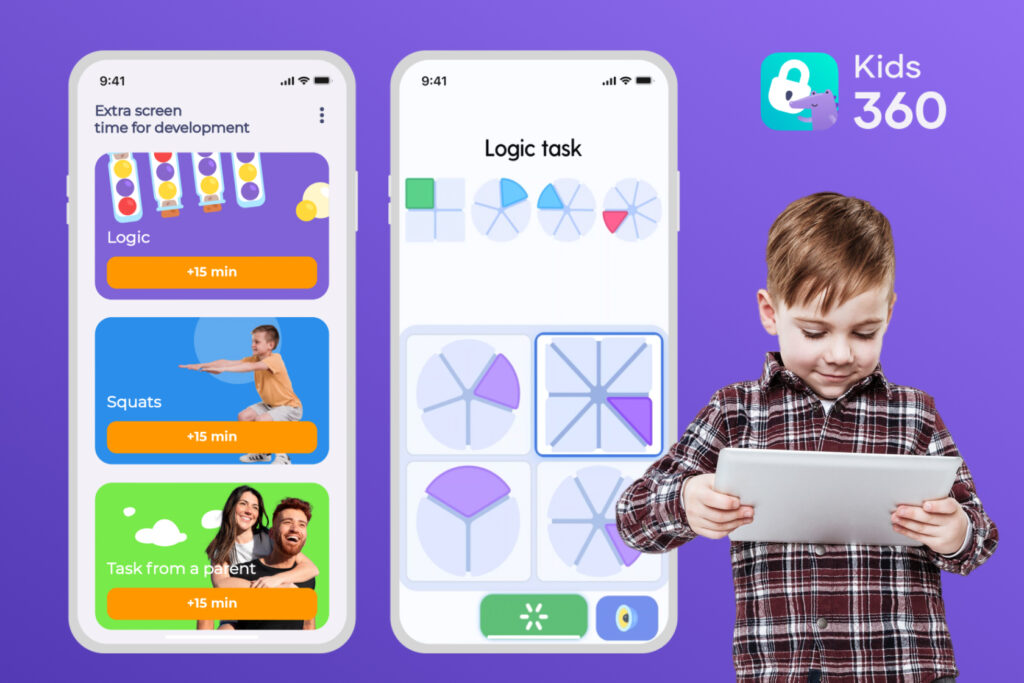
Beyond basic parental controls, the goal is to teach the child that time on the phone is a valuable resource earned through effort. Kids360 turns gadget use into a learning game where kids earn extra screen time through beneficial activities.
- Cognitive Growth: The app offers a library of over 4,400 exercises focused on logic, memory, and math.
- Automatic Rewards: For every 5 solved tasks in a category, the child earns 5 extra minutes of phone time, up to 20 minutes per day.
- Encouraging Movement: To ensure teens are not constantly glued to the screen, the AI Trainer rewards physical activity.
- Fitness Bonuses: Completing 5 repetitions of exercises like squats in front of the camera grants 10 minutes of screen time.
- Active Lifestyle: The app synchronizes with the step counter; walking 7,000 steps in a day automatically grants a +5-minute bonus.
- Parent-Set Goals: Parents can create a personal list of tasks, such as “make your bed” or “read for 20 minutes,” with rewards ranging from 5 to 30 minutes.
Real-World Peace of Mind
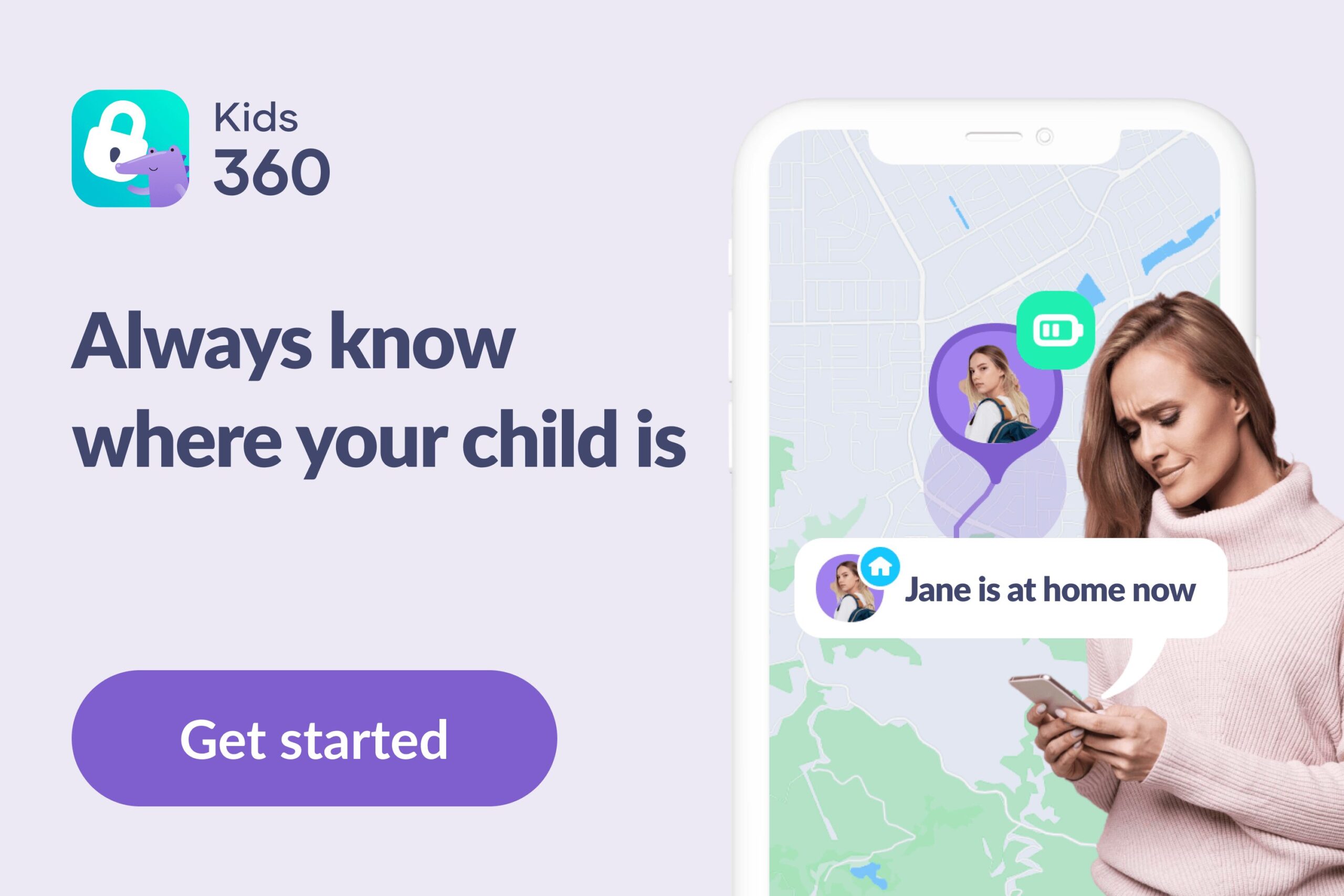
Safety also extends into the physical world while kids are out with friends. The GPS geolocation features allow you to see where your child is in real time. If they do not answer their mobile phone, you can send a loud signal that triggers an alert even if the device is in silent mode. Setting up these features takes just a few minutes, giving parents the necessary ability to protect their family while supporting their child’s maturity and independence.
Download Kids360 on Google Play and the App Store today to start your free trial and set your child up for digital success!
Establishing Ground Rules and Expectations
Before handing over the device, a mom or dad should sit down with their child to agree on terms. Clear rules prevent conflicts from happening later and ensure everyone knows what is expected.
- Phone Free Zones: Agree on specific areas, such as the dinner table or bedrooms, where phone usage is strictly off-limits to protect family time.
- Social Media Transparency: Parents should maintain access to all social media accounts and passwords for younger kids until they demonstrate consistent responsibility and maturity.
- Privacy and Safety First: Teach your child to never share their physical location with strangers or send inappropriate text messages to other kids.
- Digital Etiquette: Remind them that things happen online quickly; once a photo or comment is shared, it remains on the internet forever.
- Curfew and Sleep: Set time limits for when the phone must be turned off at night to avoid the negative effects of late-night scrolling (and what often happens during late-night scrolling) on their sleep and daily routine.
Balancing Freedom and Safety
Choosing the right age for your child to get a phone is a personal journey that looks different for every family. While the jump to middle school is when most children get their first phone, the child’s maturity and the specific parental controls you choose are what truly matter in the long run.
By learning about different tools like Kids360, you give your child the ability to explore the internet while staying within safe boundaries. Start slow, establish clear rules, and keep the lines of communication open at all times. This proactive approach ensures that when your child finally carries their own phone, it remains a tool for growth and independence rather than a source of family stress.
Sources & References
- Survey finds Japanese children using smartphones at younger ages, NHK, 2026
- New Study Looks At Young Adolescents Who Own Smartphones, Forbes, 2026
- Kids and mobiles: how Australian children are using mobile phones, ACMA, 2025
- Wait Until 8th
- This counterintuitive advice about kids and phones makes a lot of sense, Vox, 2025
- Children and Parents: Media Use and Attitudes Report, Ofcom, 2025
- How's Life for Children in the Digital Age?, OECD, 2025
- TechnologyCharted: Cellphone and Tablet Ownership Among U.S. Kids, Visual Capitalist, 2025
- The tricky timing of a child’s first smartphone, Salon, 2023
- Earlier smartphone acquisition negatively impacts language proficiency, but only for heavy media users. Results from a longitudinal quasi-experimental study, Social Science Research, 2023
- Are mobile phone ownership and age of acquisition associated with child adjustment? A 5‐year prospective study among low‐income Latinx children, NLM, 2022